
13th:
From slave to criminal with one amendment
30th April 2024
In Ava DuVernay’s harrowing documentary the 13th, she showcases the United States’s transition from inherent slavery with the 13th amendment, to a supposedly more equitable state. However, throughout her documentary, DuVernay displays the ways in which screen media has been utilised both as a tool for empowering, and as a weapon against Black Americans. In surveying DuVernay’s findings, this post will present the manner in which screen media has contributed to discourses on race, both negatively and positively, with it paying particular attention to the Black Lives Matter movement (BLM), and how screen media has shaped it perception.
Consequently, in DuVernay’s documentary, she highlights the stereotyping of Black Americans, and specifically Black men via screen media in D.W Griffith’s The Birth of a Nation. In discussing the film, the documentary highlights how it tapped into White Americans fears of Black men, with it depicting them as being “out of control … [and as] a threat to white women” (13th, 0:04:28). In its portraying of Black men as being rapists, Gates remarks that for “every image you see of a black person, is a demeaned animal like image” (13th, 0:05:34).
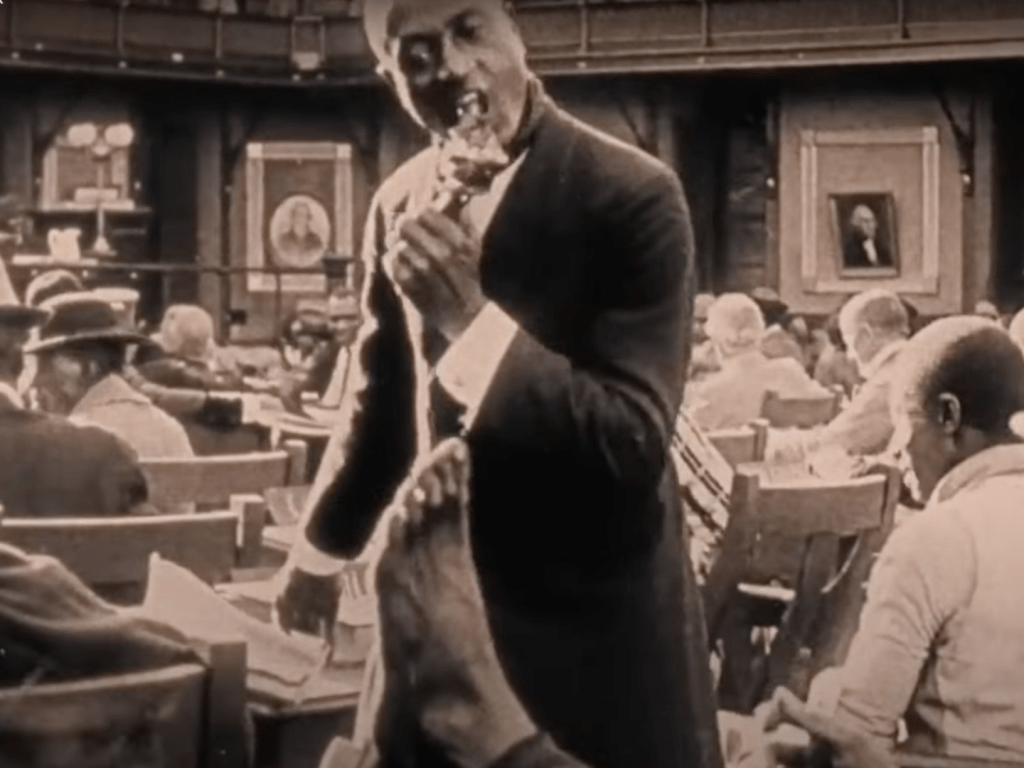


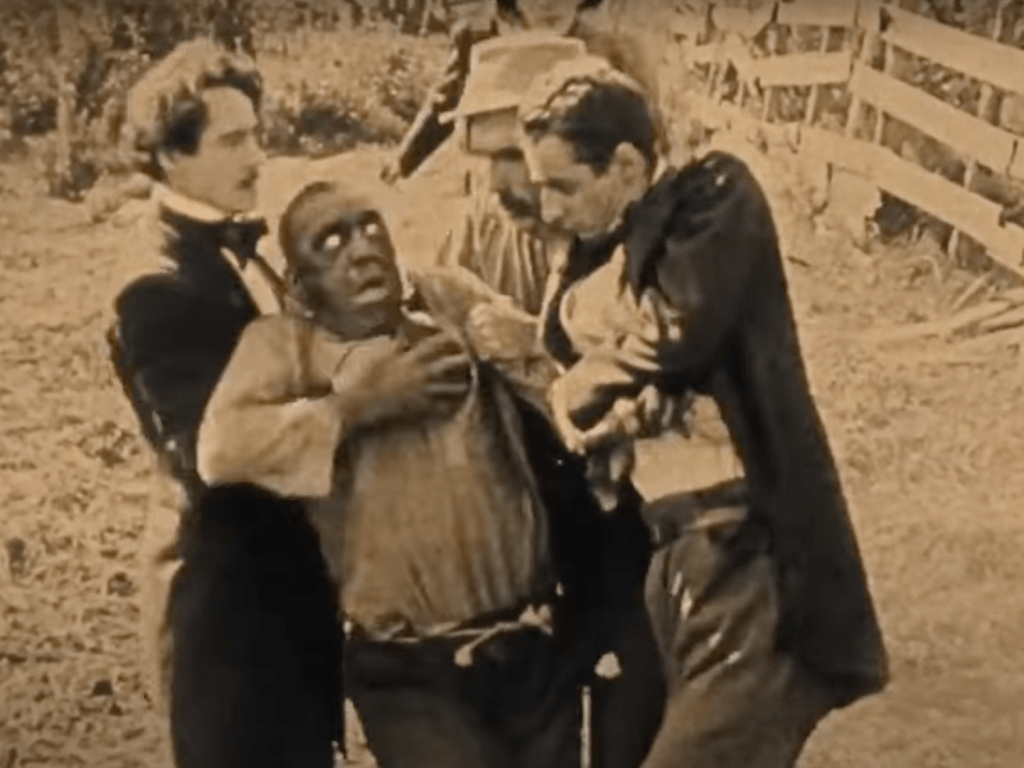
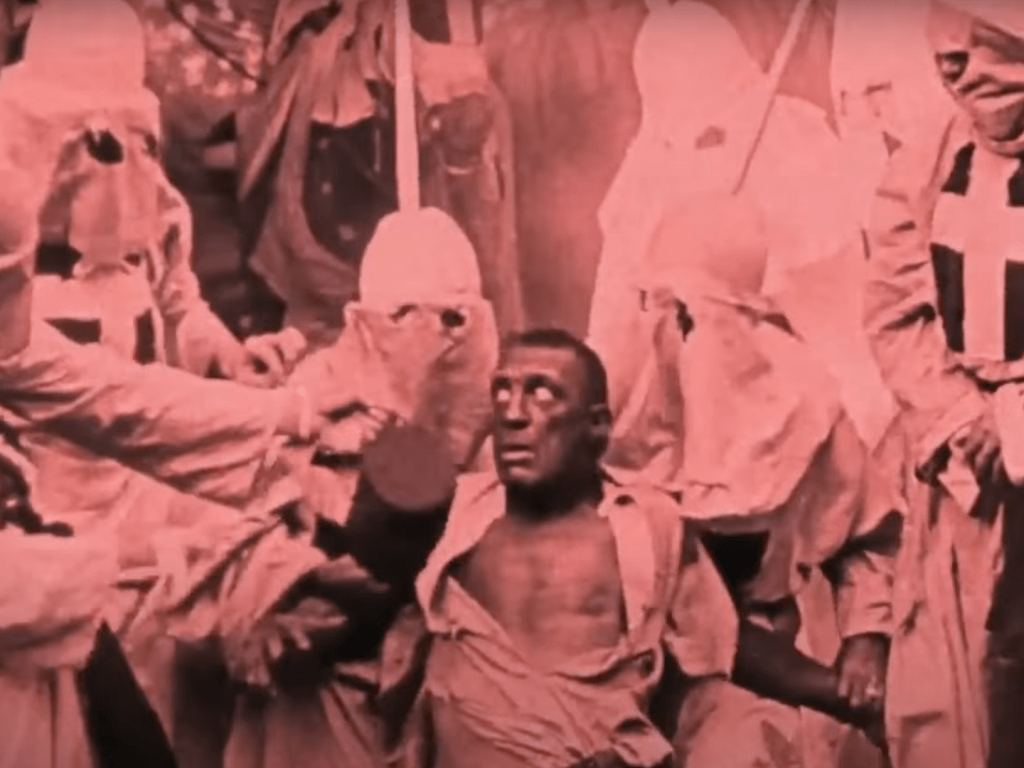
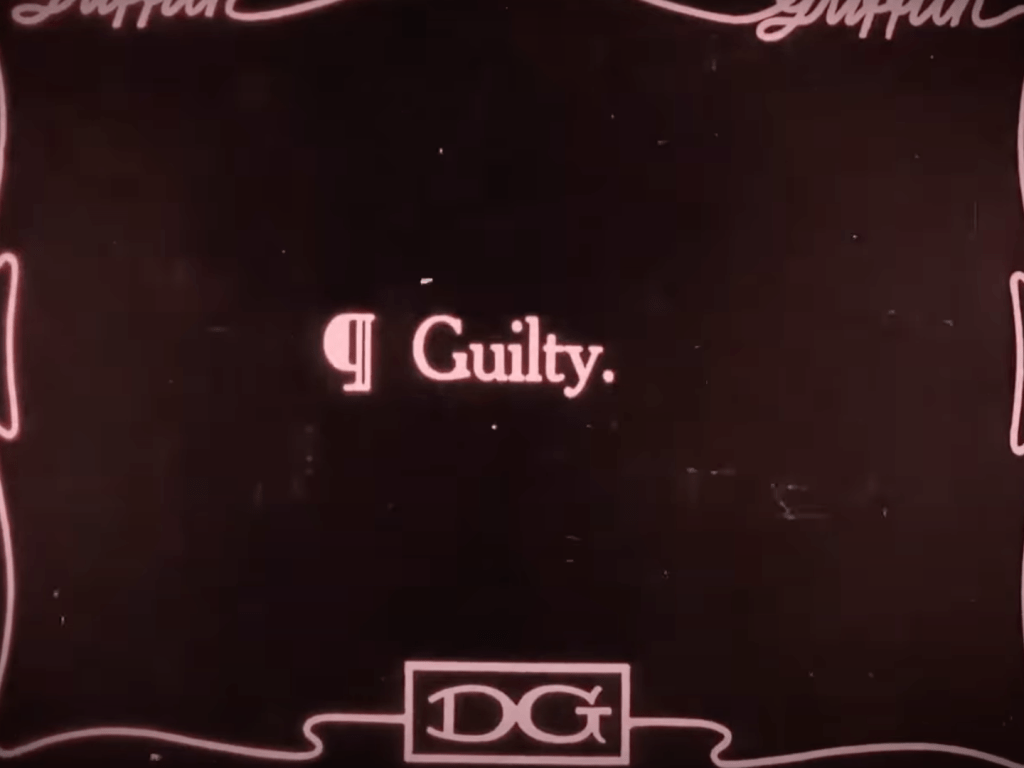
A collage of stills from ‘The Birth of a Nation’ depicting Black men as being animalistic
Facilitating the continuation of this fear into contemporary American society, has been screen media, with its facets having perpetuated the myth of Black Americans as being criminals and rapist, as evident with conservative news outlets akin to Fox News, which “have a long history of catering to the fears of white America” (Darcy, para. 5). Resulting from this is that “black people … are overrepresented in news as criminals”, with them “being paraded across the screen in handcuffs” when you turn on “your local news at night” (13th, 0:27:47). Having examined the reasoning behind their portrayals, scholars have argued that “violent frames often dominate not only the news media but also digital media reporting by activists in order to achieve visibility” (Neuyamer 4) In pursuit of garnering consistent viewership, right-wing news organisations propel the narrative of Black Americans, as evident with Fox News, as being “blamed … for rioting”, with Fox News’s website being “more likely to show Black people in stories about crime … [which] reinforce racial stereotypes” (Gift et al, para. 11).

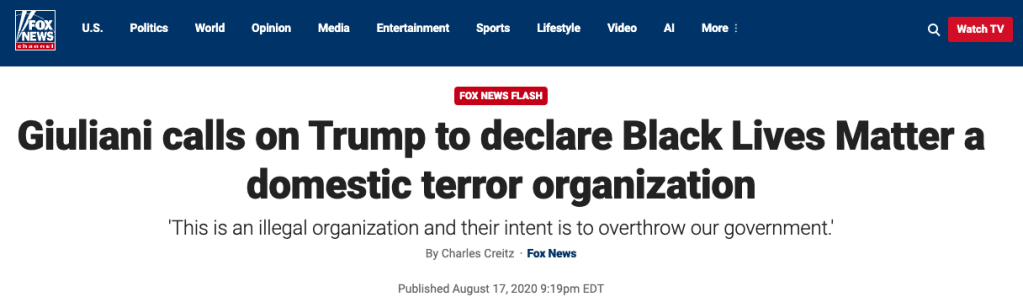
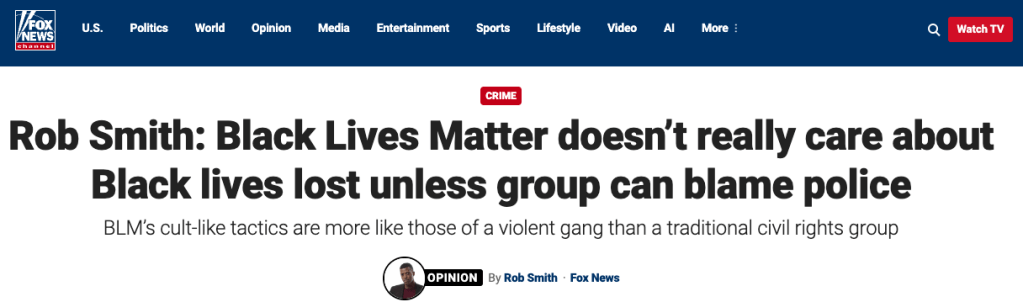

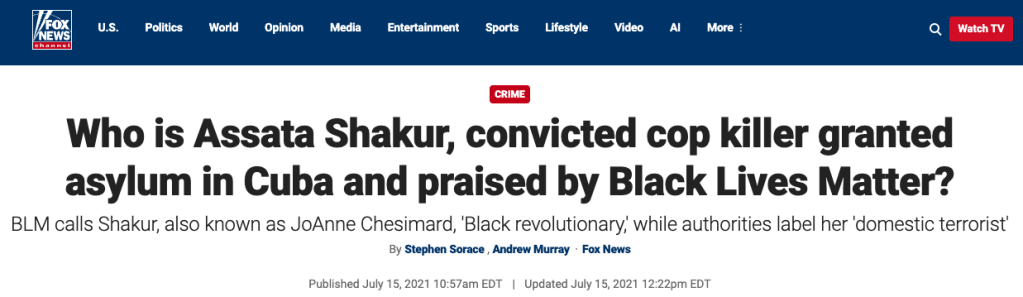

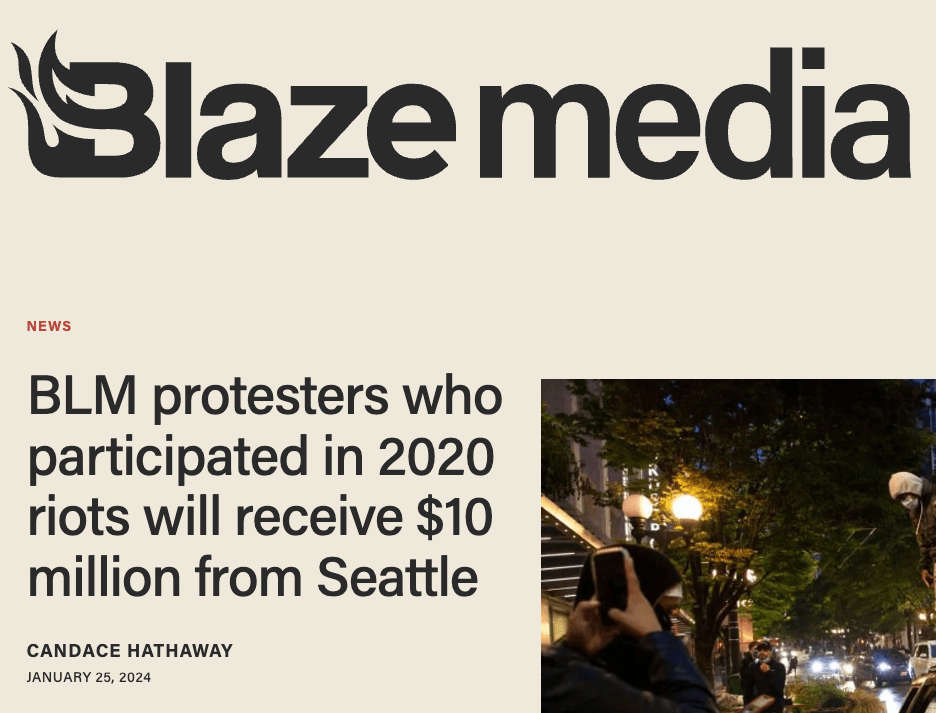
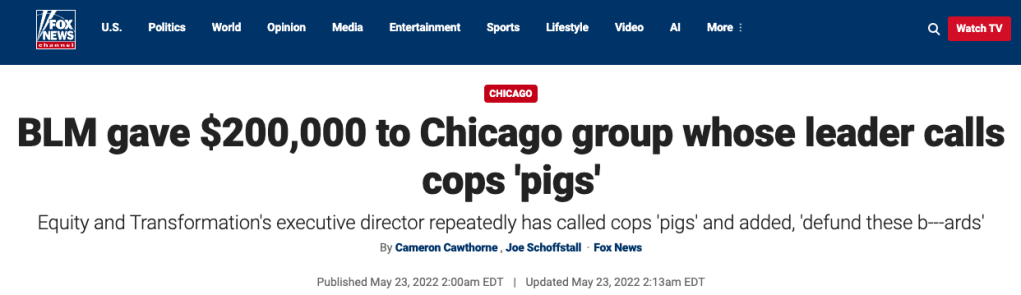
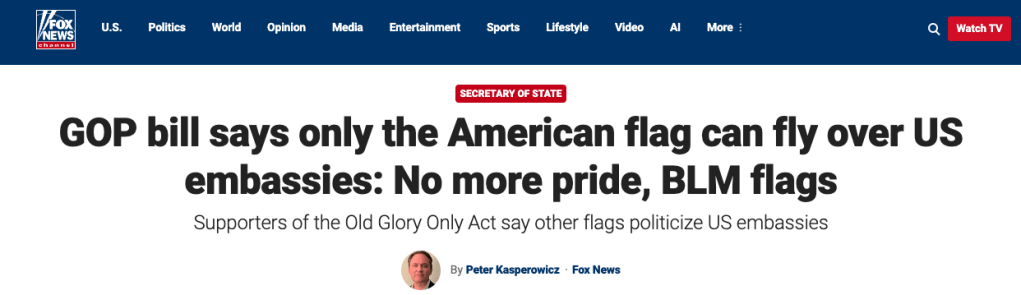
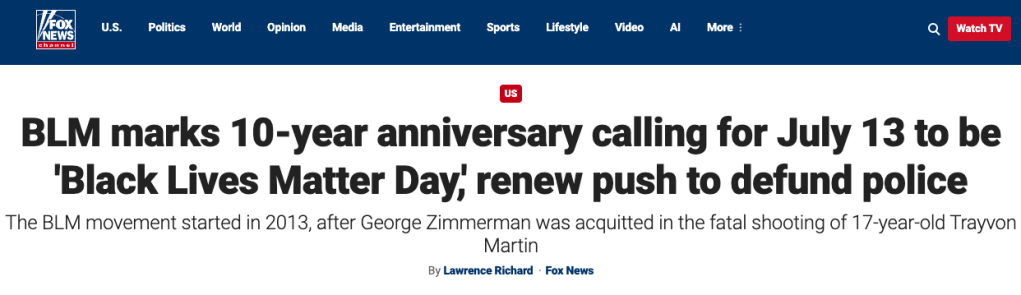
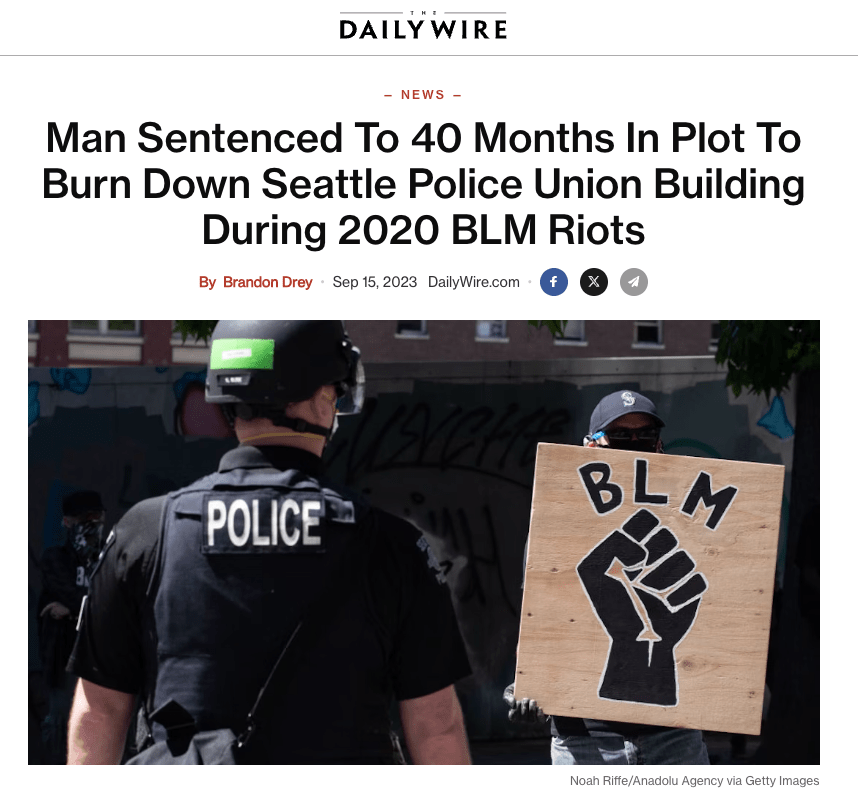

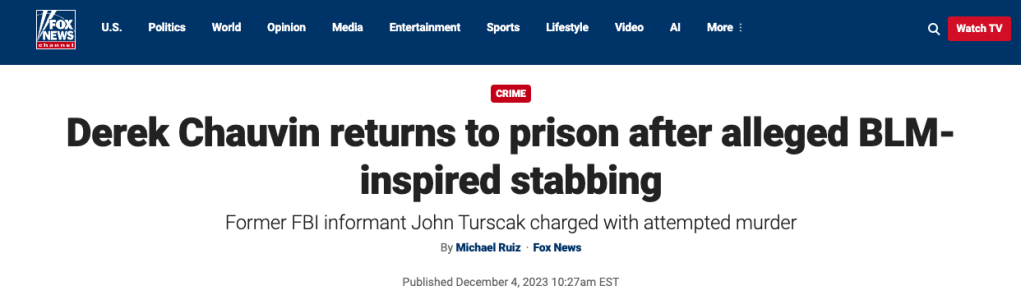

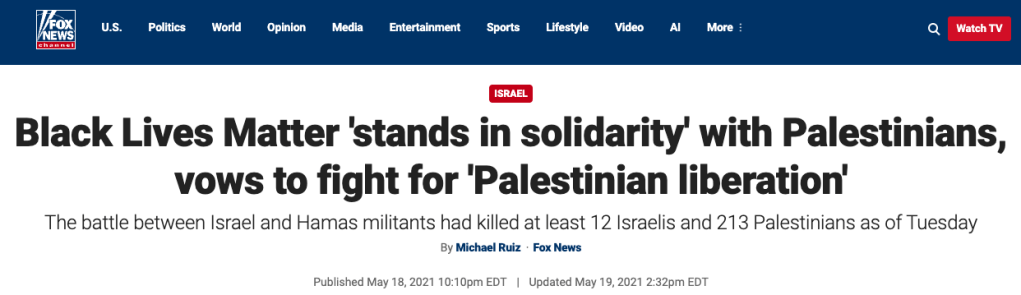
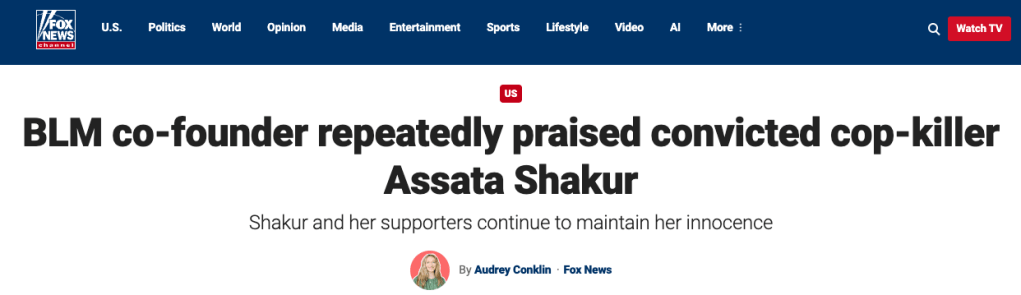

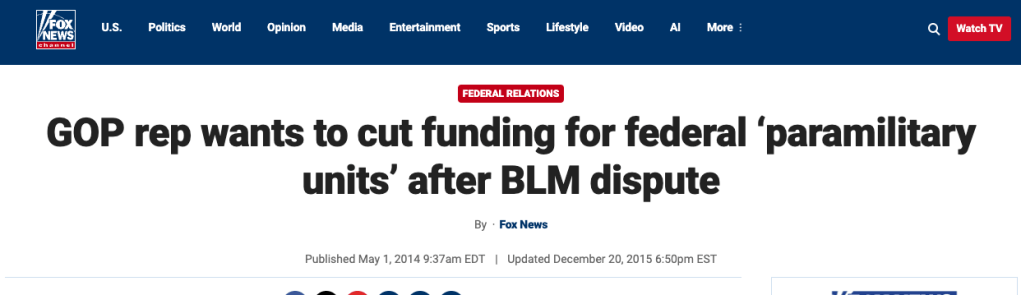
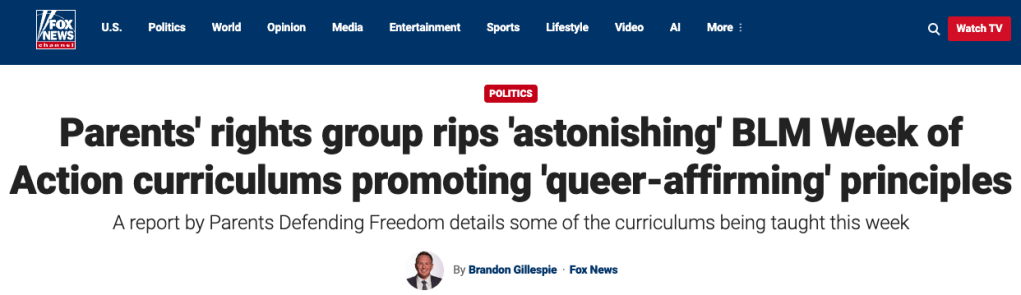

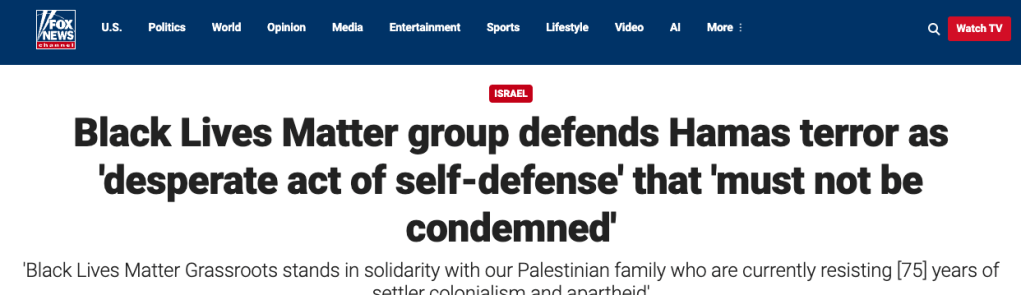
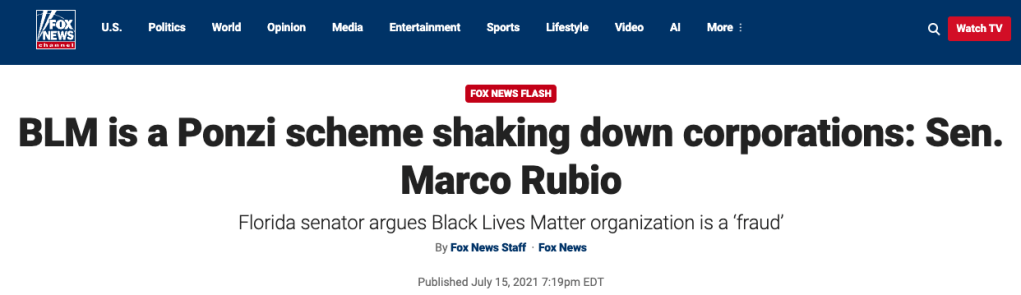
A slideshow of right-wing news headlines condemning BLM
A video by The Daily Show demonstrating the hypocrisy of Fox News’s coverage of the BLM protests compared to The State Island protests
Correlating with their depiction of Black Americans, conservative news outlets are vigorously opposed to the BLM movement, with them framing “Black Lives Matter protests with narratives that regularly [emphasise] riots and looting” (Gift et al, para. 3). However, in retaliation to this “almost two-thirds of Black adults (63%) say news about Black people is often more negative than news about other racial and ethnic groups”, with 43% agreeing that news “coverage largely stereotypes Black people” (Astke, para. 7&10).
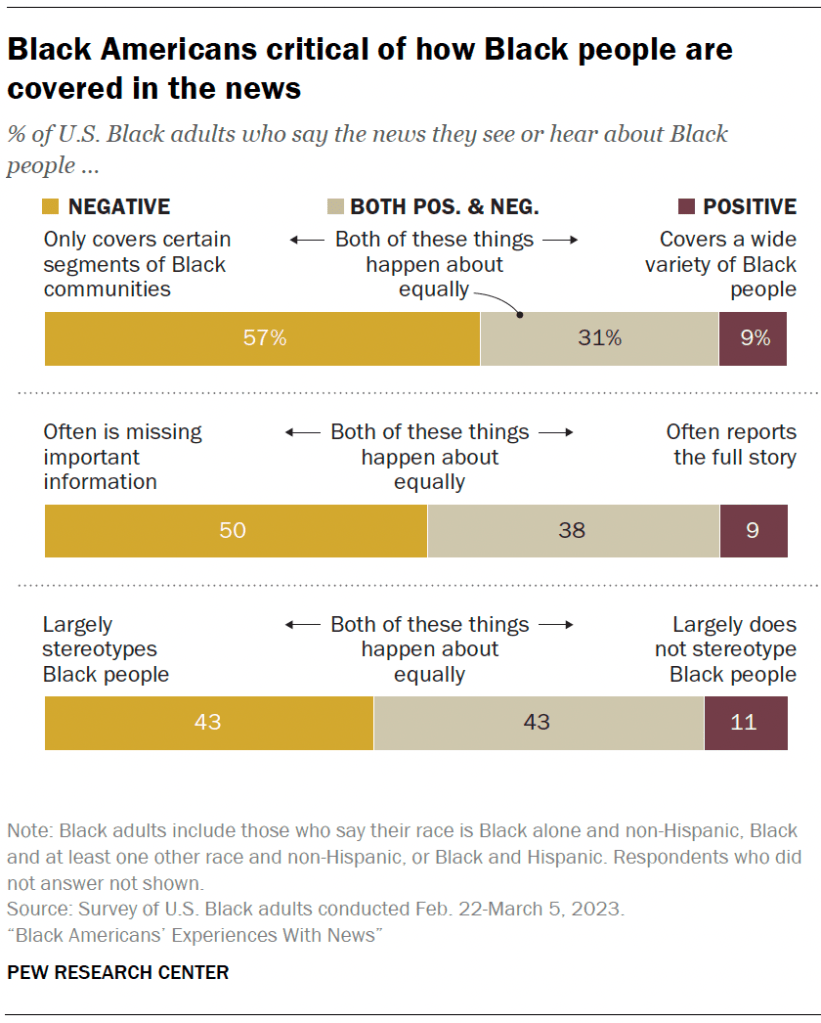
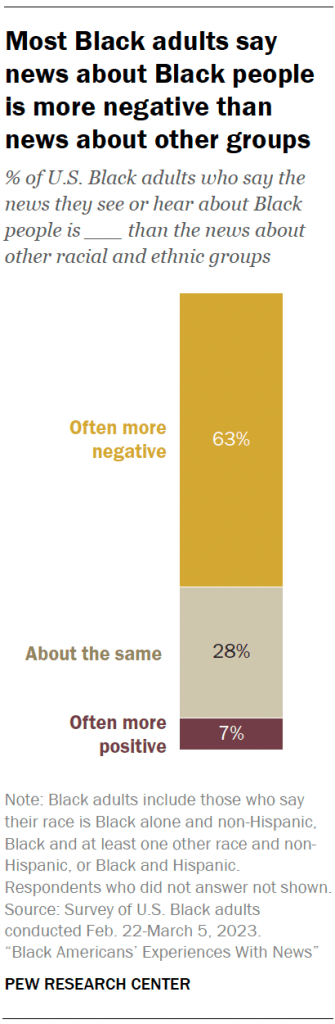
A series of graphs from the Pew Research Centre
However, technological advancements in screen media, have facilitated the creation of the BLM movement, with “these technologies” enabling people “to mobilize support” rapidly (Neumayer 2). Compared to the previous decades where movements relied on strong figures, such as Fred Hampton with the Black Panthers, which made their leaders venerable to attacks, as evident with the murdering of Hampton by the Police. Now with the advent of social media, movements like the BLM movement have become decentralised and transitional, with them being able to “raise questions about the conduct of elites” whilst “facilitating informal learning about broader issues of social injustice”, as evident with Hashtivism (Reilly 393).
Works Cited:
Atske, Sara. “Black Americans’ Experiences with News.” Pew Research Center, Pew Research Center, 26 Sept. 2023, https://pewresearch.org/journalism/2023/09/26/black-americans-experiences-with-news. Accessed 28th April 2024.
13th. Directed by Ava DuVernay, Netflix, 2016, https://www.youtube.com/watch?v=krfcq5pF8u8. Accessed 28th April 2024.
Darcy, Oliver. “How Fox News Is Making a Network out of Race Baiting | CNN Business.” CNN, Cable News Network, 23 July 2021, https://edition.cnn.com/2021/07/23/media/fox-news-race-baiting. Accessed 28th April 2024.
Gift, Thomas, et al. “Does Fox News Encourage Racial Bias?” The Washington Post, 24 Dec. 2022, https://washingtonpost.com/politics/2022/12/24/just-seeing-fox-news-logo-prompts-racial-bias-new-research-suggests. Accessed 28th April 2024.
Neumayer, Christina. “Activism.” The Routledge Encyclopedia of Citizen Media, 1st ed., Routledge, 2022, pp. 1–6, https://www.taylorfrancis.com/books/edit/10.4324/9781315619811/routledge-encyclopedia-citizen-media-luis-p%C3%A9rez-gonz%C3%A1lez-bolette-blaagaard-mona-baker-henry-jones?context=ubx&refId=1cd26732-6e89-4044-96b3-1c8f78f74330. Accessed 28th April 2024.
Reilly, Paul. “Sousveillance.” The Routledge Encyclopedia of Citizen Media, 1st ed., Routledge, 2022, pp. 390–394,https://www.taylorfrancis.com/books/edit/10.4324/9781315619811/routledge-encyclopedia-citizen-media-luis-p%C3%A9rez-gonz%C3%A1lez-bolette-blaagaard-mona-baker-henry-jones?context=ubx&refId=1cd26732-6e89-4044-96b3-1c8f78f74330. Accessed 28th April 2024.
 Seán Leahy's Cinematic Portfolio