
Portrayals of the Jazz Age in American cinema and culture:
18th December 2023
The Jazz Age:
The Jazz Age was an era of great triumph and change in America, with its ideals of prosperity being at the cornerstone of its foundation. Interwoven within this society and its culture was the belief in the so-called ‘American Dream’, the idea that anyone (as long as you were white, male and able-bodied) could achieve greatness and wealth. Alas this was not meant to be, as the US economy came to a halt with the 1929 Wall Street Crash, which set in motion a monumental change in American history, with what became coined as The Great Depression. Thus, this led to some dire consequences for American populace, with it being the de facto reasoning for the termination of the ‘Roaring Twenties’, and furthermore the Jazz Age itself.
Therefore, in my exploration of this era, I will discuss both the films and culture that defined this decade. As well as how they relate and sometimes juxtapose with one another, along with unearthing what they can tell us about this period in American history. In doing so, I will first investigate concept of the ‘Roaring Twenties’; secondly, I will explore the leisure and urban development of the 1920s; thirdly, I will examine the correlation between the advertisements and gender roles of the 1920s; and lastly, I will assess labour relations within America during the 1920s.
The Roaring Twenties:
The culture that epitomised 1920s America was one of great optimism (as indicated by its economy), but also one of both civil and racial upheaval. Homing in on the positives of this era, the economy was booming which led to America becoming an economic superpower during this period. A representation of this new highly industrialised America would be the Fordian assembly line, with its two major components being standardisation and egalitarianism. Consequently, because of this, it meant that there was a rise in the need for specialisation amongst the general workforce. This led to workers becoming highly skilled at one particular task, such as inserting rivets into a metal sheet. An example of this can be seen in the 1928 film Lonesome, in which the character of Jim (played by Glenn Tryon), who is a factory worker is depicted using a punch press machine to ident holes into metal sheets.

This new infatuation with standardisation by America’s businesses as exemplified by the Fordian assembly line, seeped into other aspects of its culture, such as its mode of producing films (i.e the central producer system) during this era. Akin to the factory workers, specialisation of a studios employees was essential, but no one individual was indispensable. Alongside this, the concept of standardisation also affected consumers products during this period, such as Henry Ford’s Model T car and his famous quote surrounding it “[a] customer can have a car painted any color that he wants so long as it is black” (The Model T).
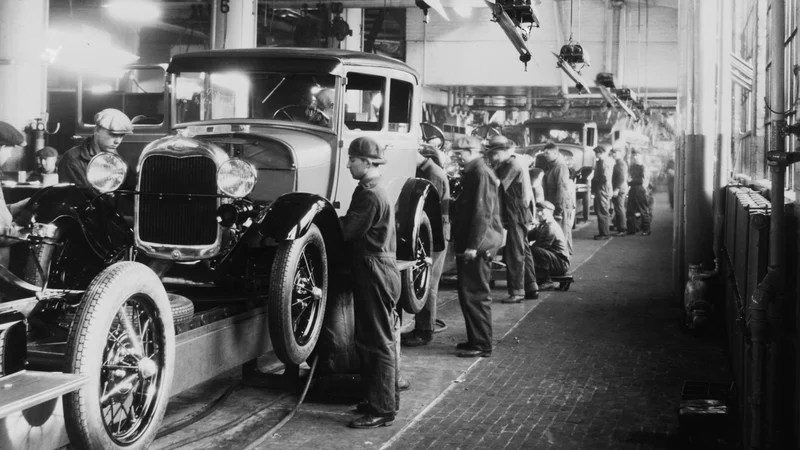
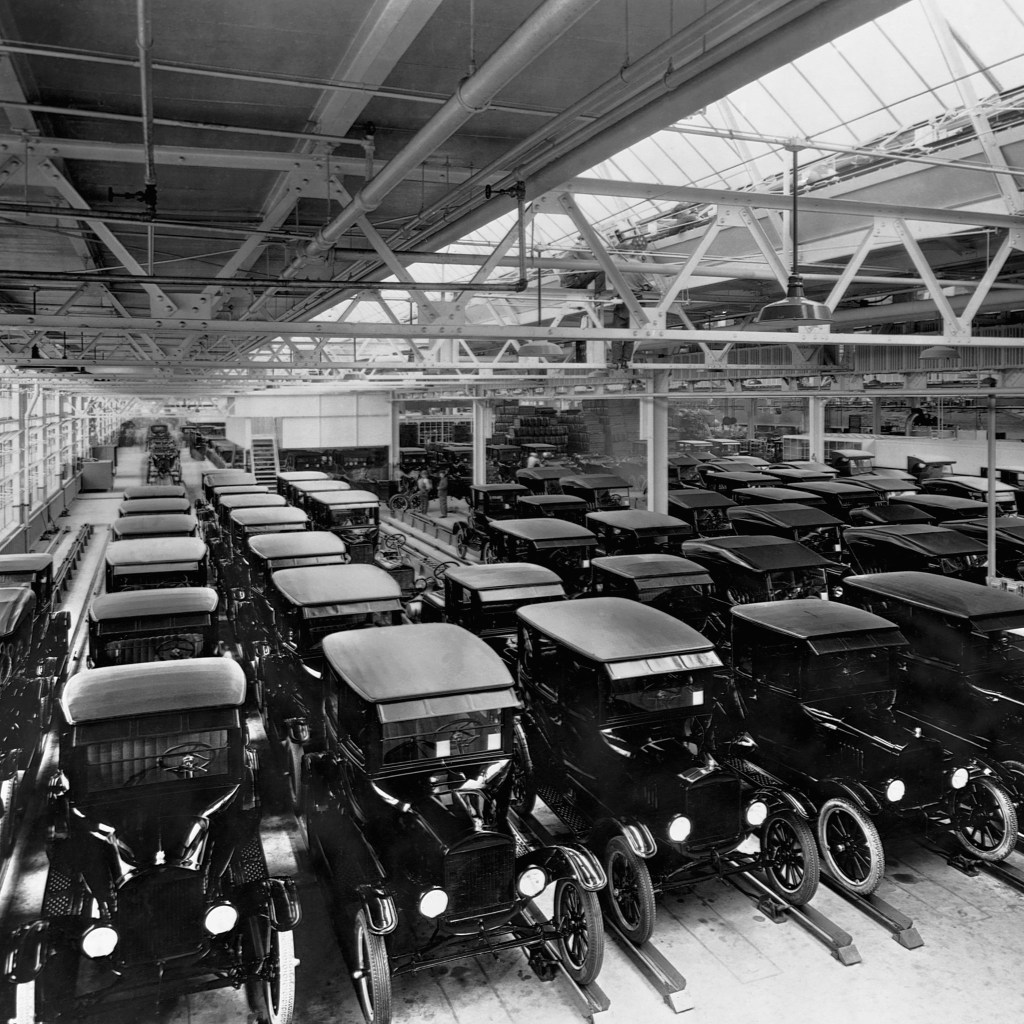
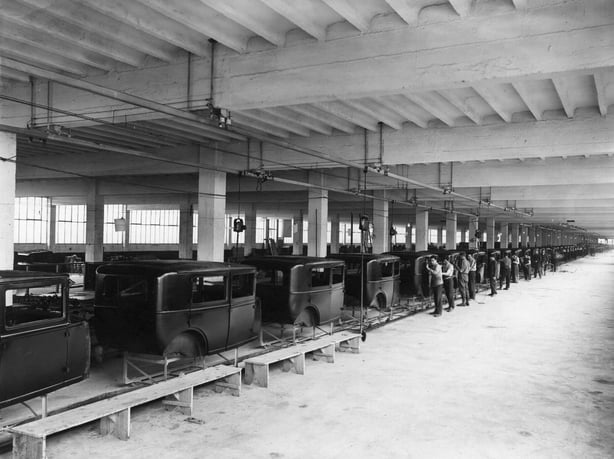
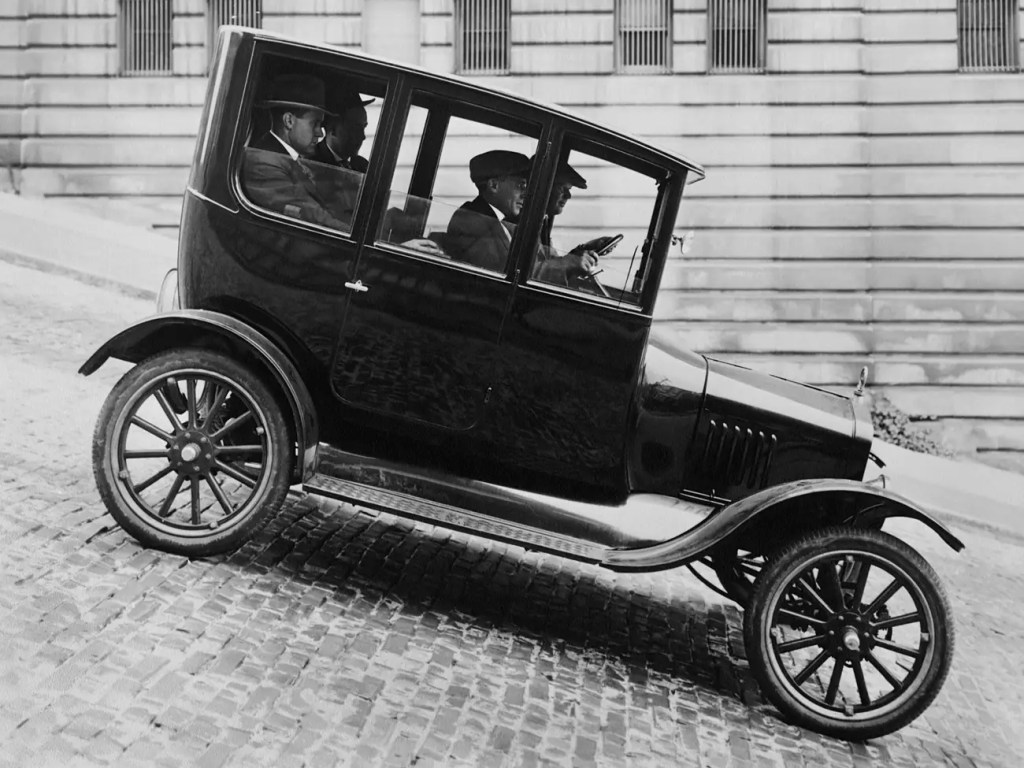
Photographs of the Ford model T assembly line
Leisure & Urban developments of the 1920s:
Shifting focus to the leisure activities that the people of this time would indulge in, a notable example would be that of Coney Island in New York City. This designated area of leisure had a multitude of rides and attractions for the local inhabitants, such as roller coasters and traditional funfair games. The island itself was a prominent figure in a plethora of films from this era, such as in the 1928 films: The Crowd, Speedy and Lonesome. In all films the island is depicted as being a place of mass indulgence of physical exertion and capitalism. Nowhere is this more evident than in with the many rides and attractions that Glenn Tryon and Barbera Kent’s characters in Lonesome pay to take part in, such as the high striker machine, spinning saucer ride and the ball tossing carnival game.
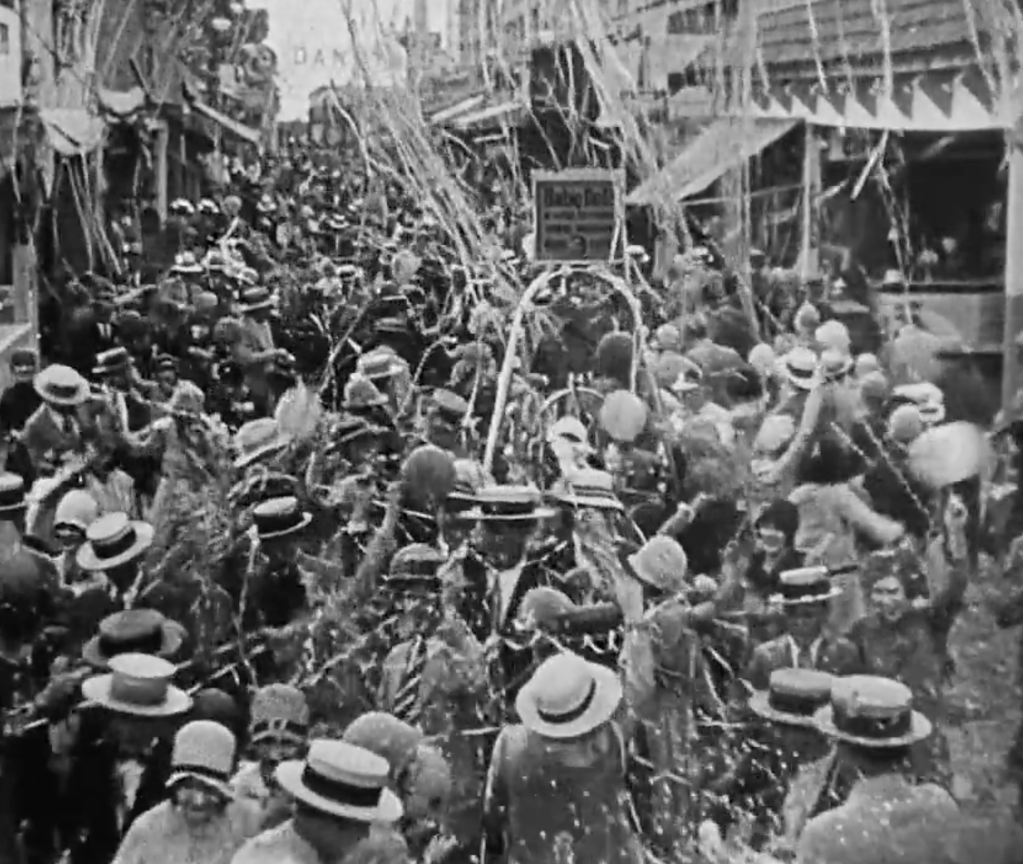
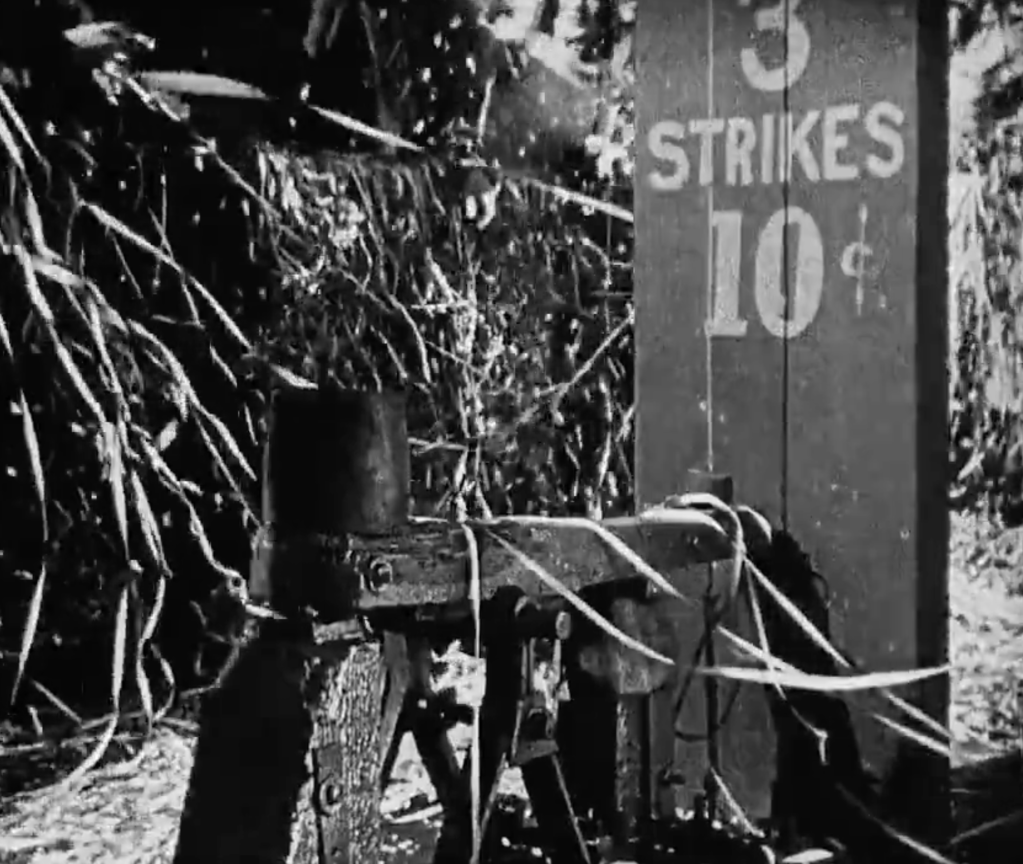
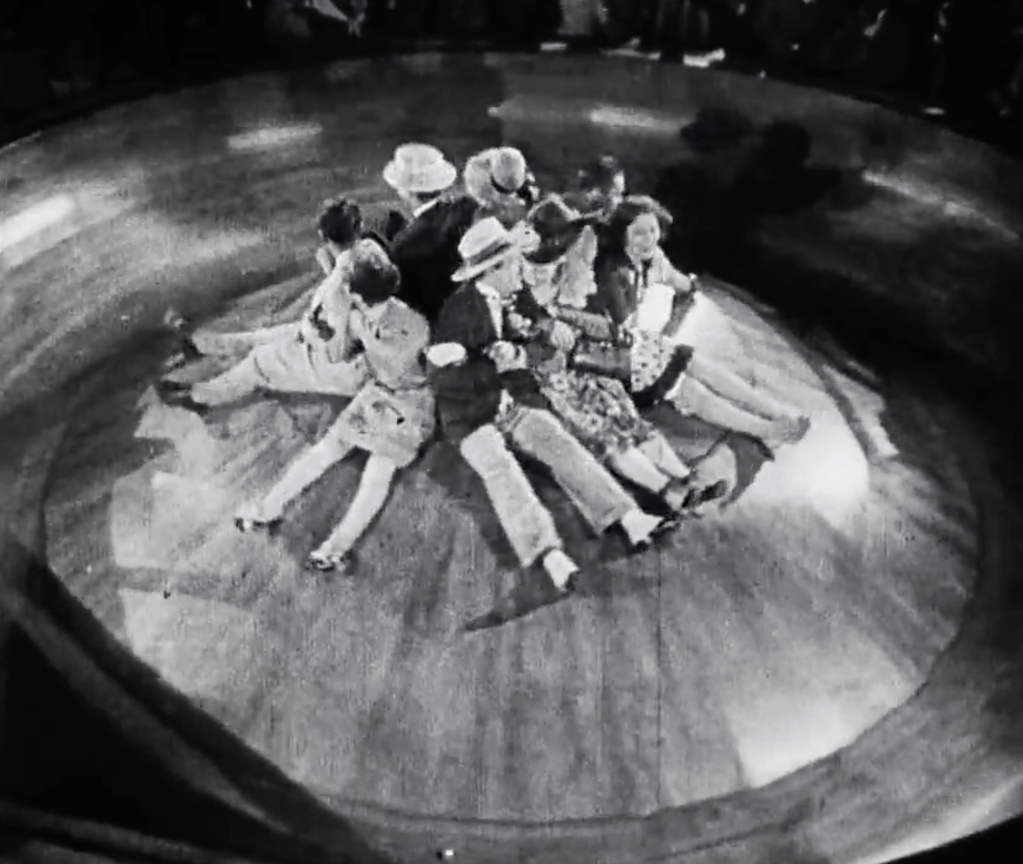

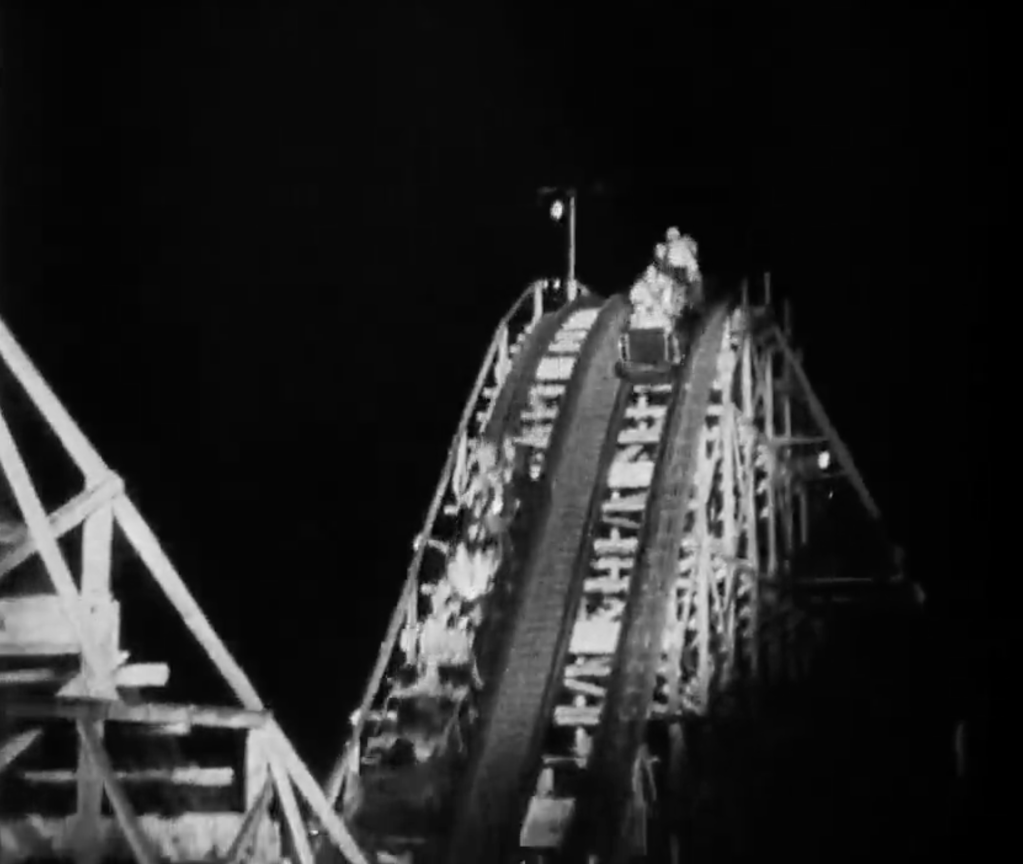
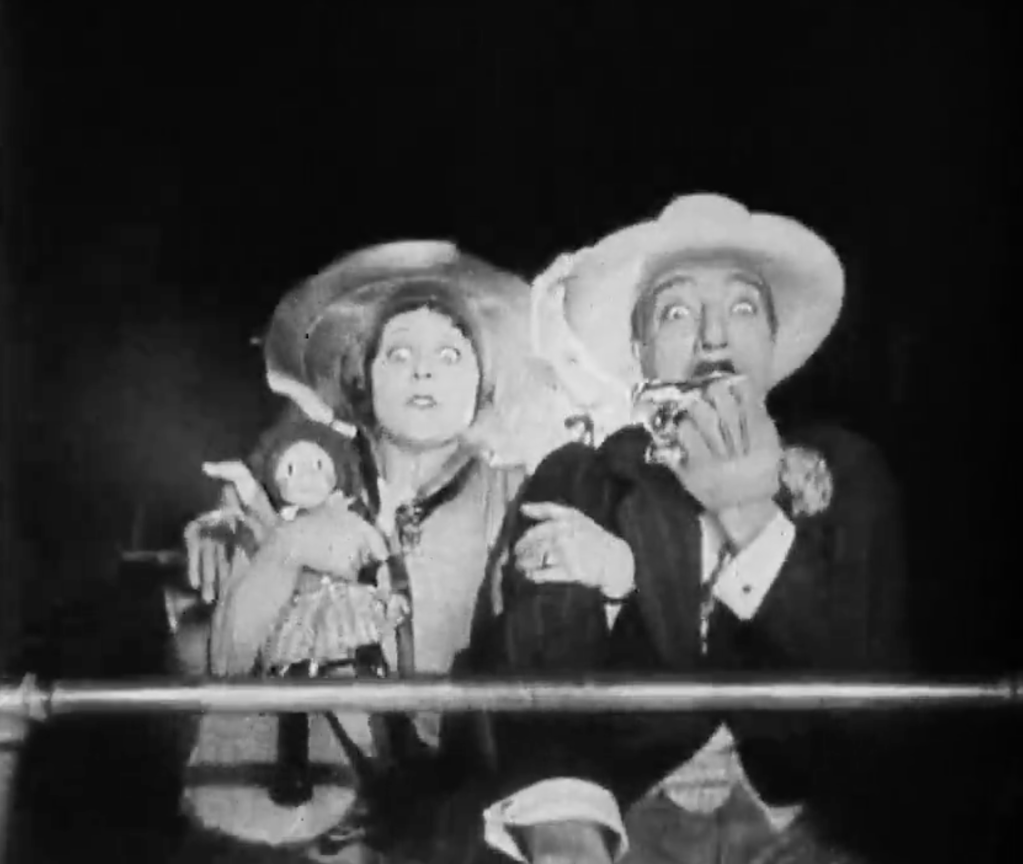

Stills from the portrayal of Coney Island in Lonesome (1928).
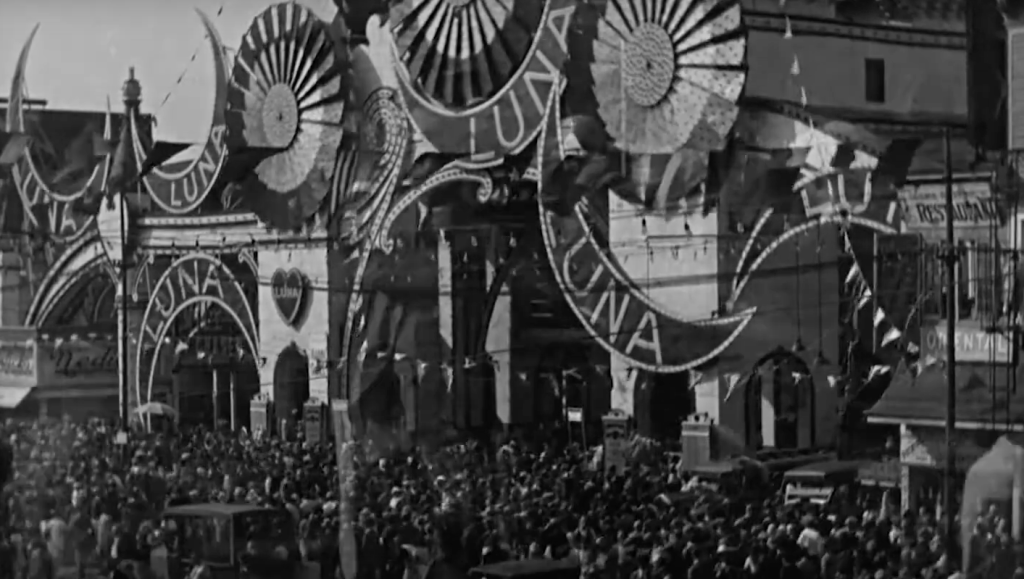
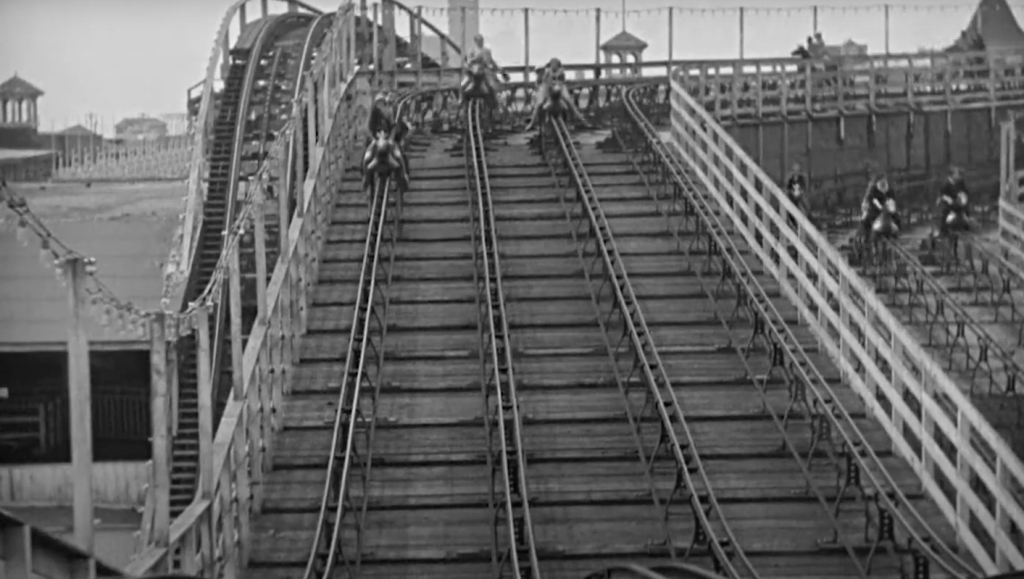
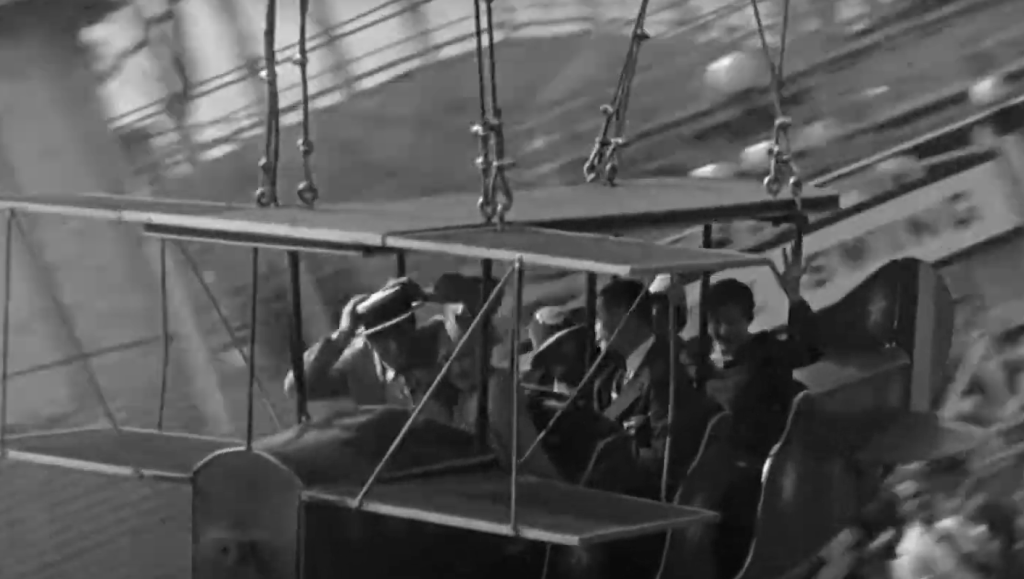
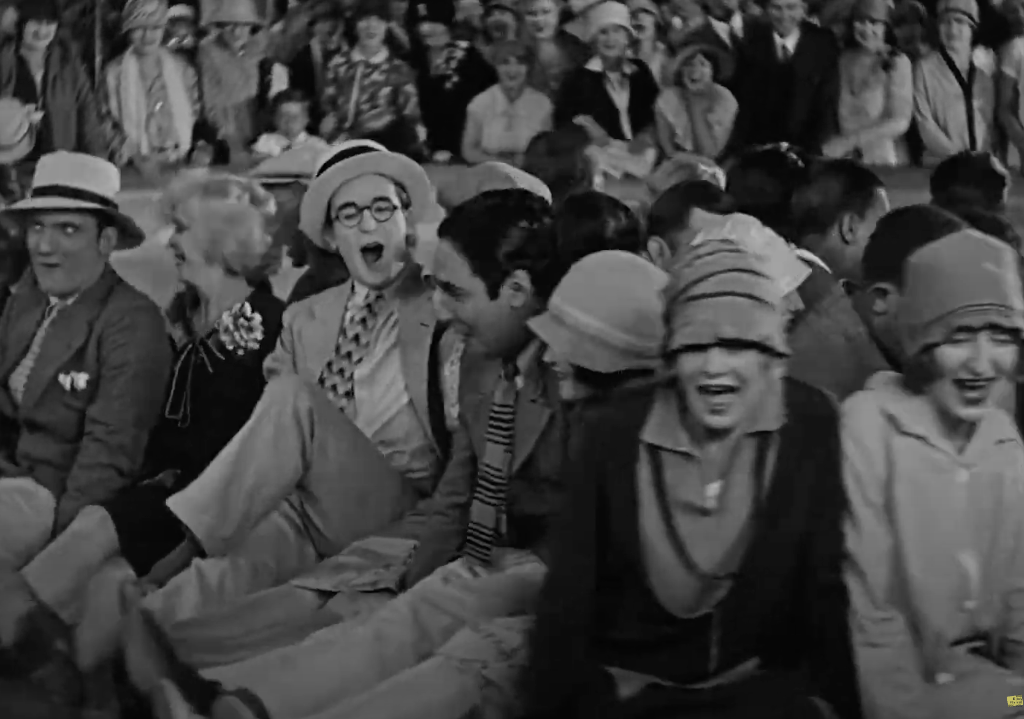


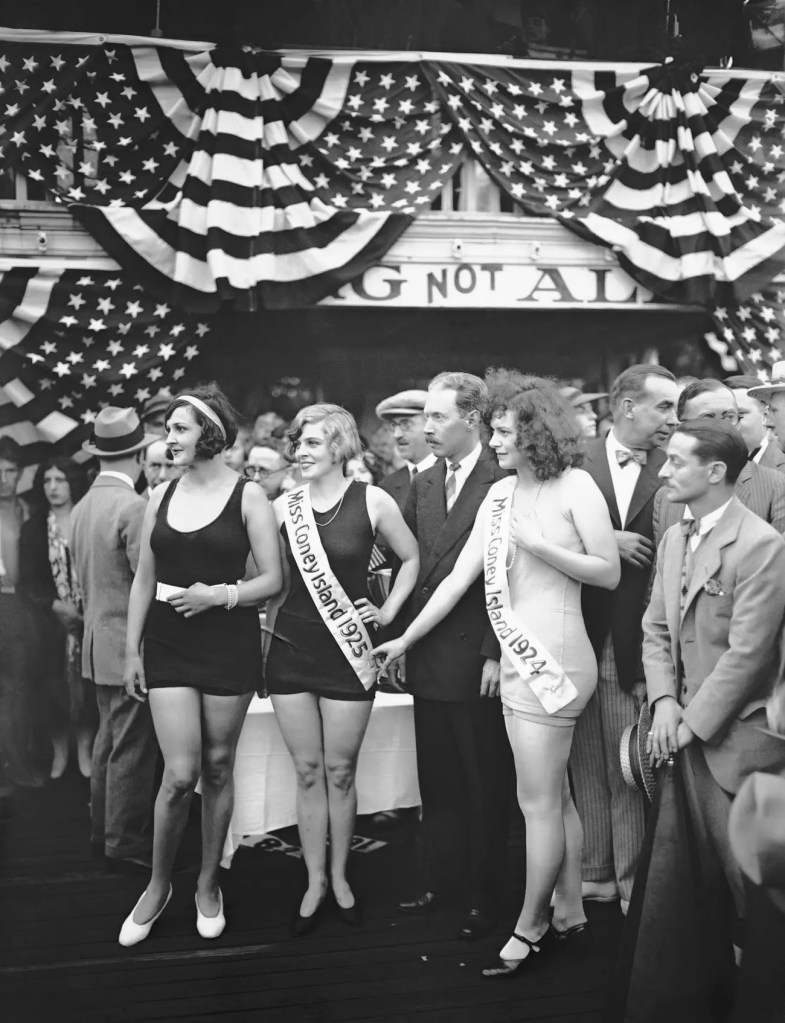
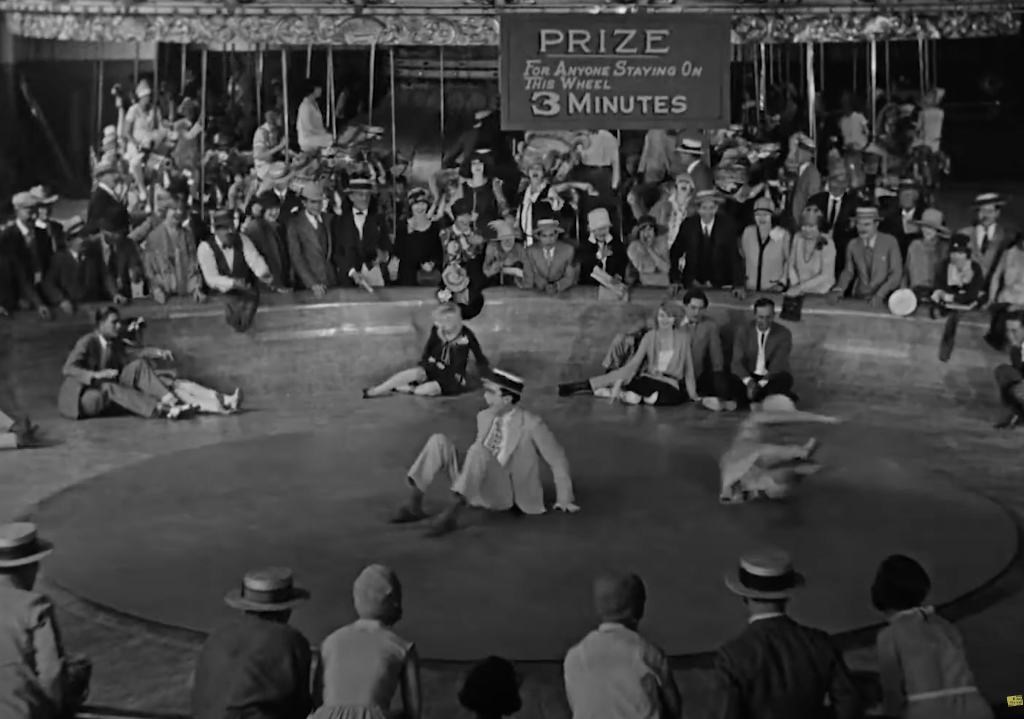
Real life photographs, and stills of Coney Island in Speedy (1928).
During the 1920s, leisure in urban areas was organised instead of being more spontaneous as it was in the rural areas of America. This was in part due to the more rigid and structured environment that surrounded urban areas, such as the compacting of people and businesses into more confined areas. Examples that exemplify this would be the emergence of the enormous skyscrapers across the New York City landscape, such as the Chrysler Building and the Empire State Building.
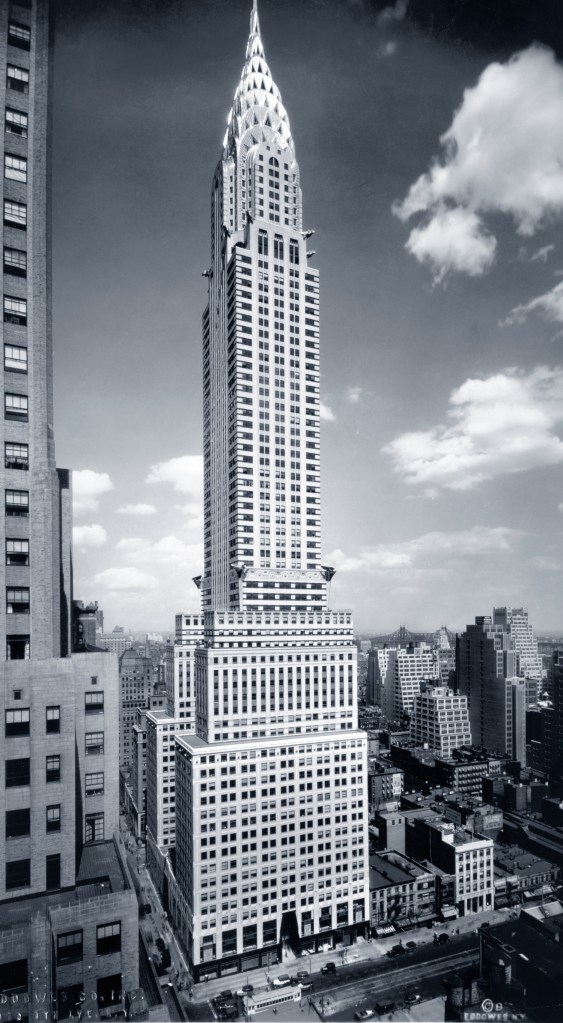

Consequently because of this confinement, people felt they needed to go somewhere so that they could move around more freely and escape the rigid constraints of the urban landscape. Evidently, this can be seen in the cultural produce of this era, such as in the film Lonesome, in which Jim says to himself, “There’s nothing like the hurly-burly of a carnival ride to help recover from the stress of daily routine.” (Lonesome 00:25:00). Jim’s statement on wishing to “… recover from the stress of daily routine” highlights how his job as a factory worker is monotonous and boring due to specialisation, in which he repeats the same task repeatedly. This sense of boredom and wanting to escape is mirrored in Mary’s dialogue with Jim during their encounter at Coney Island, in which she expresses to Jim why she desired to leave the urban environment of her home and workplace for that of Coney Island, “I neglected all my duties today and escaped” (Lonesome 0:33:00). Mary’s use of word ‘escaped’ highlights her feeling of being entrapped, like that of a prisoner within the concrete jungle that is New York City. Like Lonesome in The Crowd the individual is shown to have little impact on the environment and culture around them. Instead, the individual is shown to be just a cog in a much larger machine.

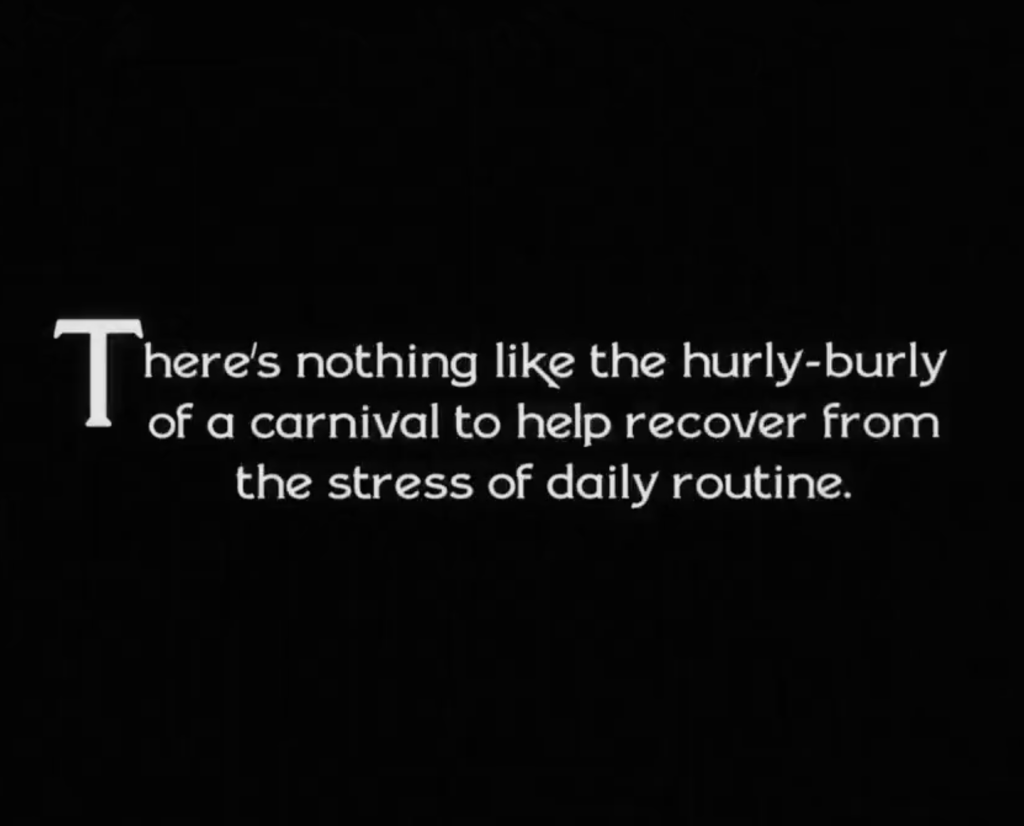
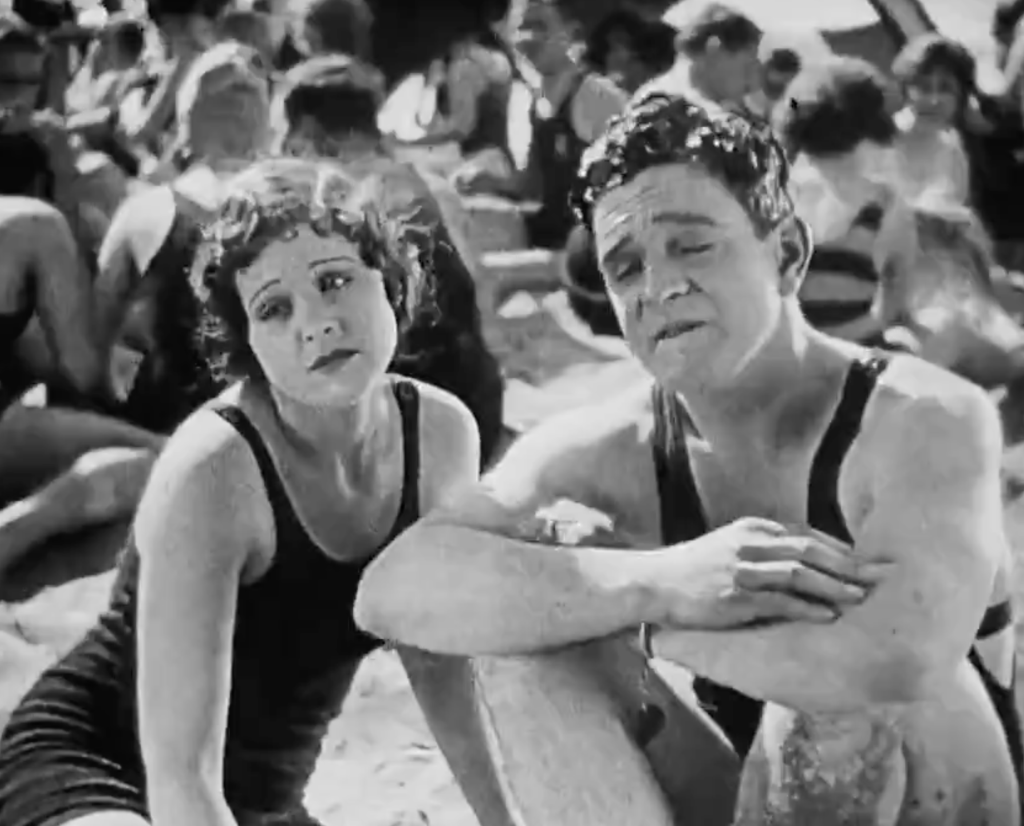
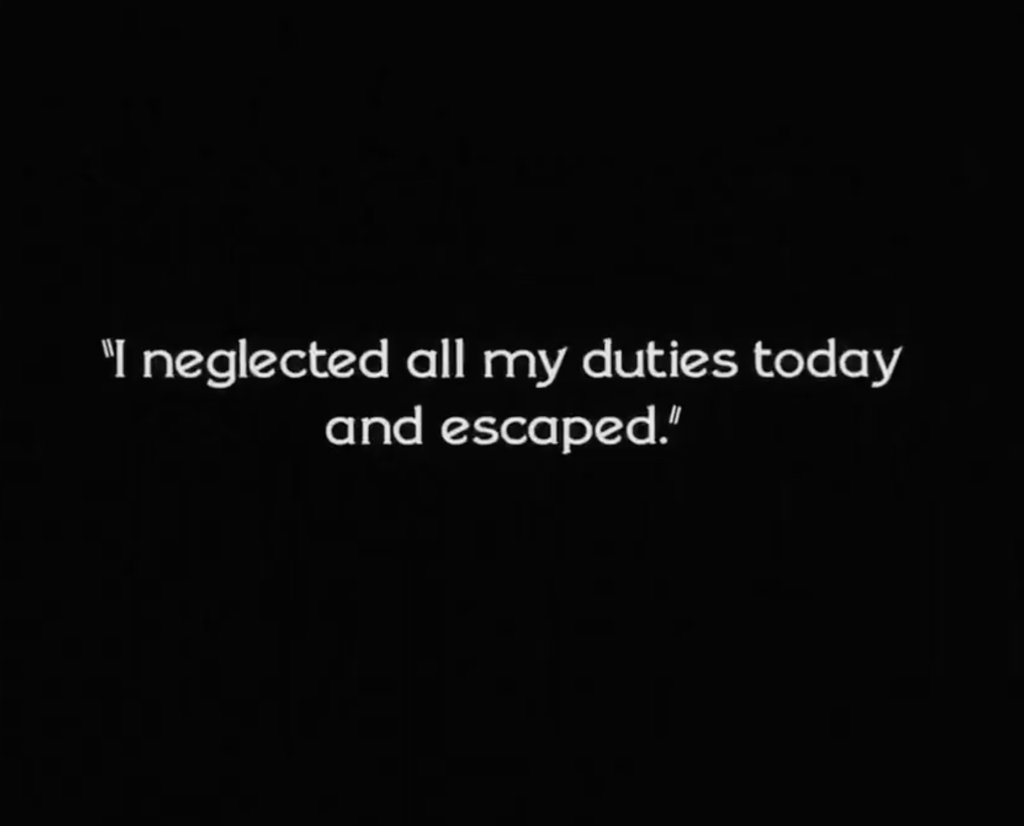

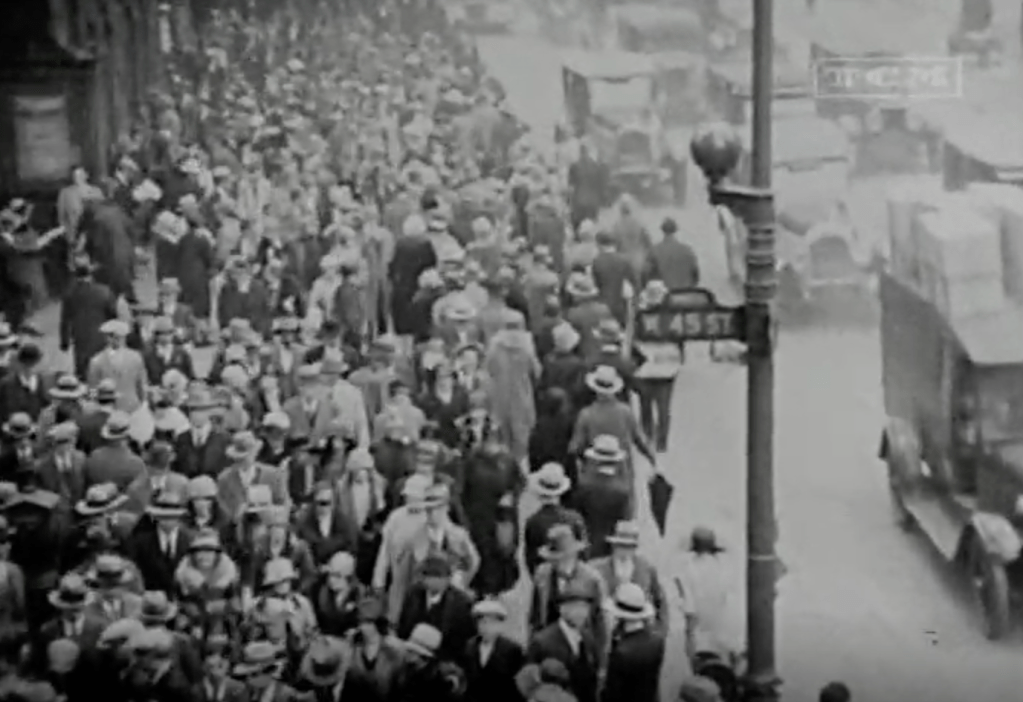
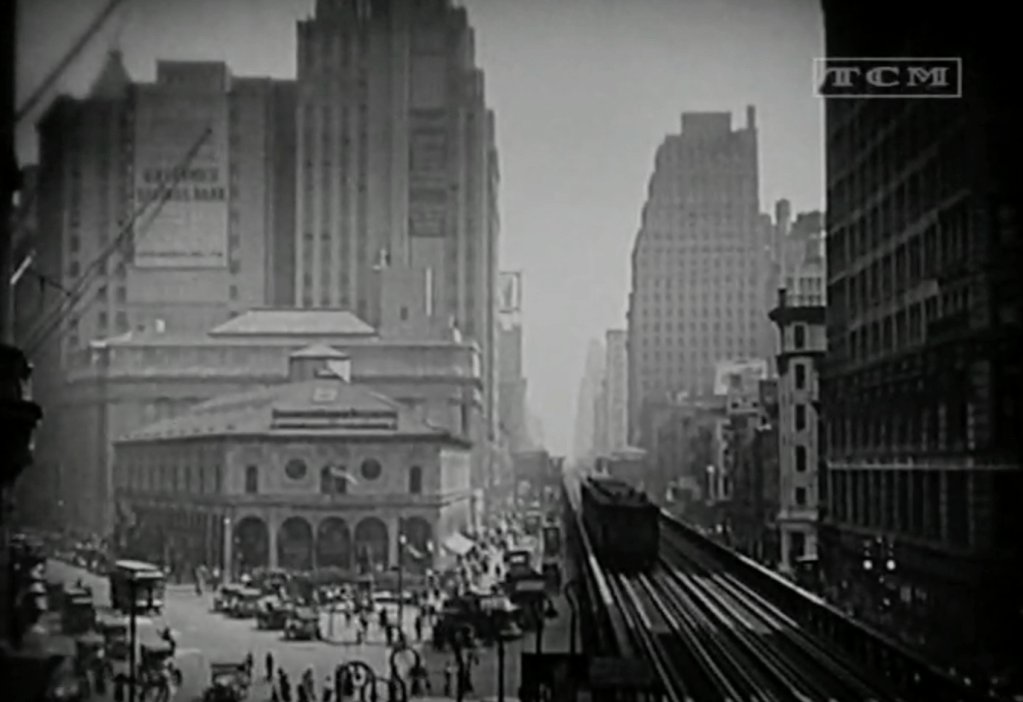
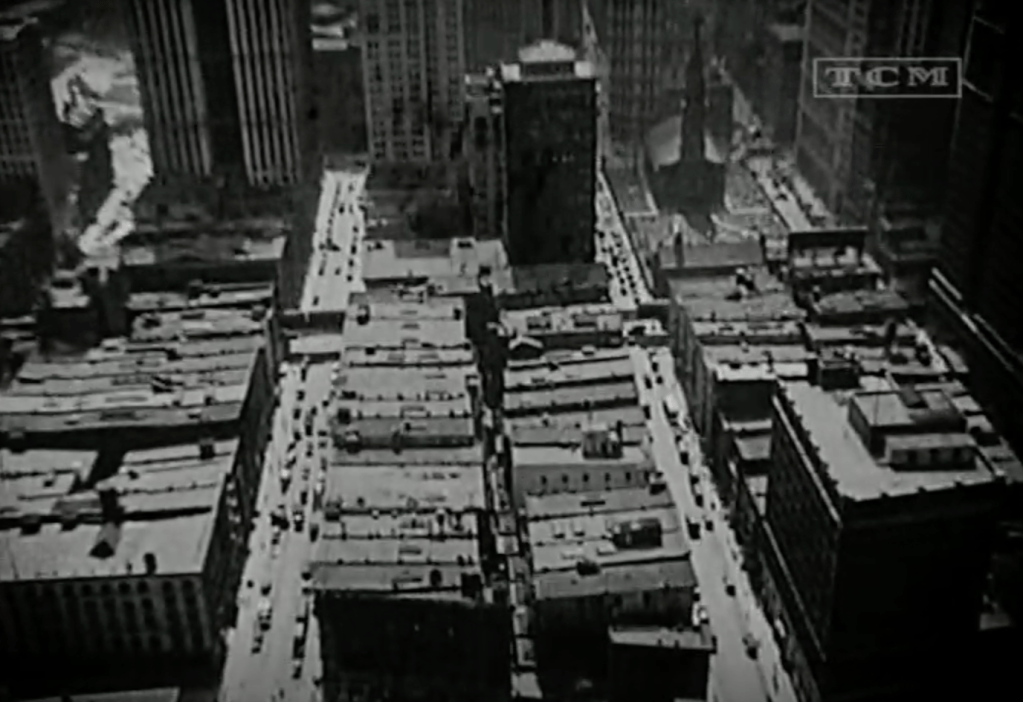
Stills from Lonesome (1928) about escaping the urban envrionemnt. As well as stills from the inital NYC montage sequence in The Crowd (1928) which demonstrates the feeling of entrapment as evident in both films.
Advertising & Gender:
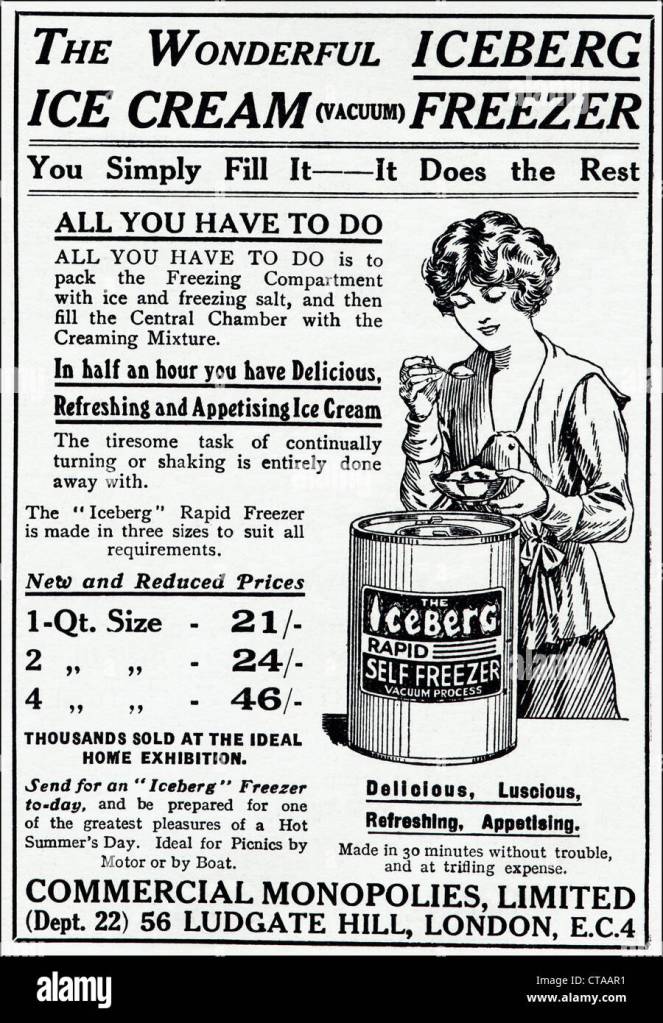
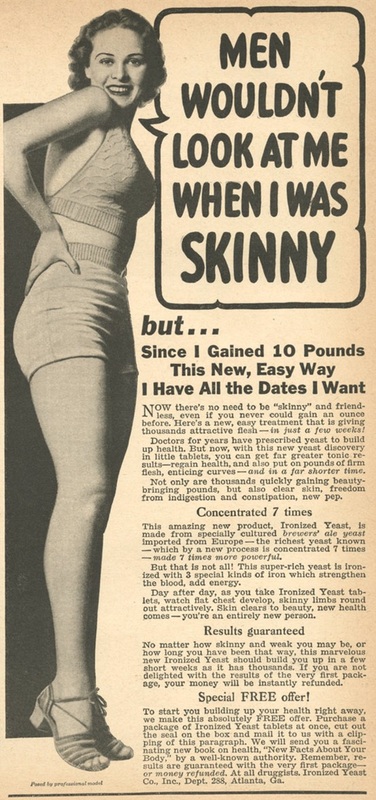
Moving onto the more problematic parts of this period, we can see a clear gender divide in the advertising standards of companies, which was reflective of the culture in this era. And with this, its social expectations of each gender, as pre-determined by the ruling patriarchy. In the four examples below you can see this playout, and how the female gender was advertised to, with it often being done through the male gaze.
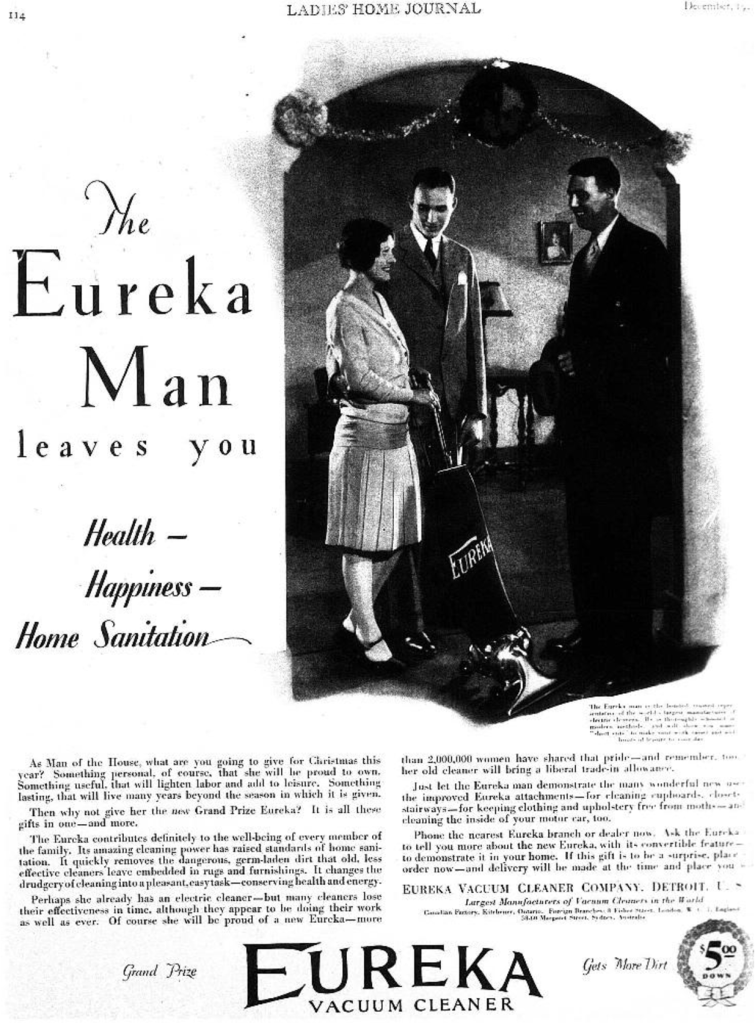

In the first advertisement we can see this with its headline being “The Eureka Man leaves you, health, happiness [and] home sanitation”. This advertisement was utilised to sell the idea to women, that if they bought Eureka’s Vacuum Cleaner that they too could achieve happiness akin to the couple depicted in the ad. This sexist and condescending ad’s telling of women that they can have a happy marriage by cleaning their home, highlights what was expected of women in 1920s America, and the cultural norms of that era.
In the second ad we are shown a more subdued version of this, but there still a strong commonality between the two. In both ads the women are depicted as doing trivial tasks, such cleaning the home and preparing desert for the family. This servicing by the female gender for others, showcases how women were still to some degree domesticated in the 1920s due to the responsibility of being a housewife. Writer Lynn Dumenil reinforces this with her stating that, “They [(referring to advertising companies)] glamorized the role of [the] housewife, and depicted housework and cooking as an essential means [for a woman] to nurture her family while providing her self-worth.” (36). Despite the societal pressures imposed upon women to stay domesticated in the 1920s like in the above adverts, they still did make great social strides such as the ratification of the 19th Amendment (on the 18th of August 1920) which gave women the right to vote. Nevertheless, if you look at the two ads below that are targeted at the male gender, you can see that there is less emphases placed on their ‘societal role’ like that of the women depicted in the above adverts.
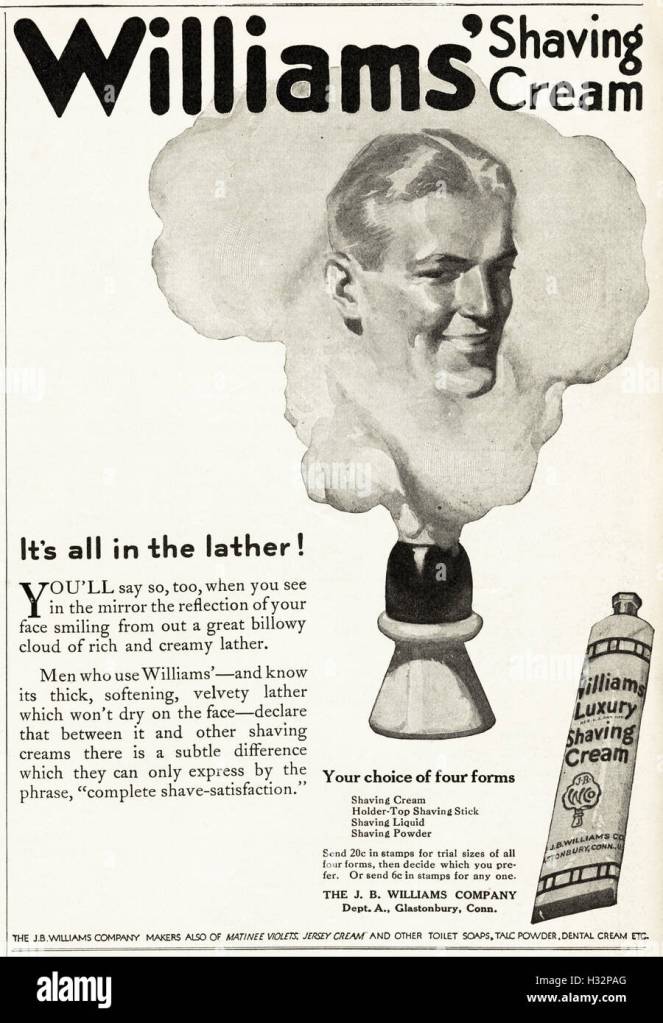
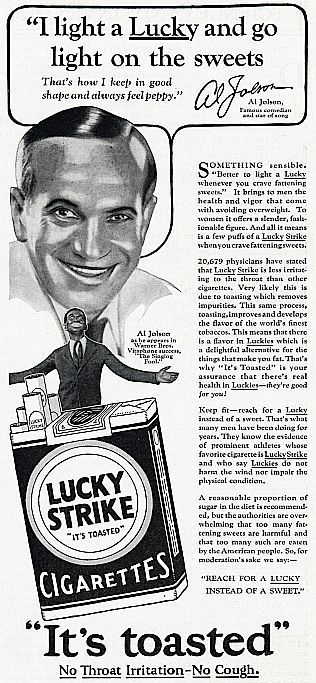
Instead, the ads are more straightforward and are just telling men to buy their product. It doesn’t play to any insecurities that men might have, such as that of their physical appearance. The ads also don’t tell men that if the refuse buy the product in the advertisement, that they won’t be able to attract a member of the opposite gender or keep up a happy marriage, like that of The Eureka Man advertisement. Keeping this in mind, the films from this era mirror this mode of thinking and attitude, with its differing advertising standards for each gender, take the clothing advert below for example.
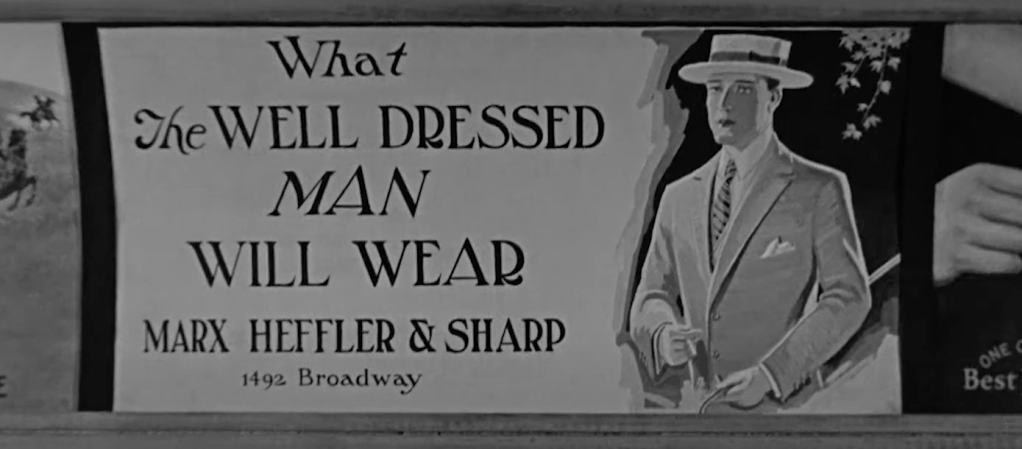
In this advert (which is taken from the 1928 film Speedy) we are presented with an ad that targets men, particularly the more well off, as indicated by the suits manufacturer Marx Heffler & Sharp. This advert similarly to the two others before it, simply focuses on selling a product to its target audience, and has no underlying societal pressures imposed upon it. Conversely, if you look at the advertisement below (that is from the 1928 film The Crowd) you can observe how society’s expectations were imposed upon the men of this era.
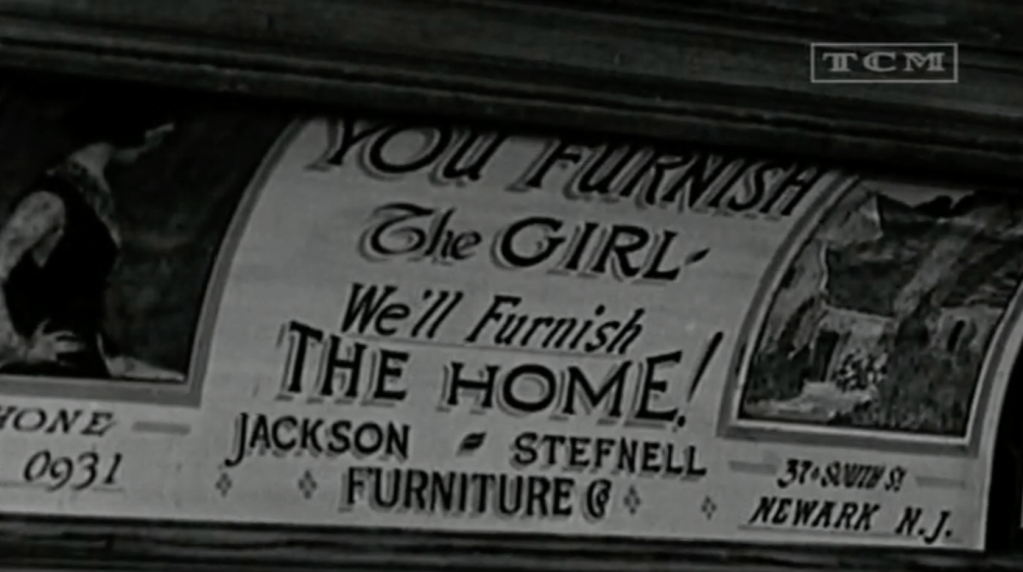
The ads headline being “You furnish the girl, we’ll furnish the home!” showcases how the men of this time were expected to treat women. Essentially, they were to glorify the women and treat them like an object akin to that of a home, one that they would “… furnish …” and decorate with elaborate jewellery and dresses. This objectification of women highlights the male dominated society of America in the 1920s, but it also reinforces the idea of men being able to indulge into both the public and private spheres of society, whilst the women were limited in their movements, by being socially pressured to stay within the private sphere of the home.
Labour Realtions:
Changing topic, another important facet of American culture and history during the Jazz Age, was society’s relationship with oligopolies, and that of workers rights. From the onset of the decade, the power that unions had gained in the previous few years had begun to dwindle as a direct result of, “… a series of Supreme Court rulings in late 1921 and 1922 that declared pro-union provisions of the Clayton Act [(which sought to improve workers’ rights) being deemed as] unconstitutional.” (Monique & Ritschl 2).
The consequence of the Supreme Court’s decision to remove strides made unions in the previous years, indicates a change in society’s outlook on unions, and their place within American society. Whilst unions and their members were being question and threatened during this period (a prime example being the 400,000 railroad shopmen strike of 1922), less emphasis was placed upon the regulating of businesses and that of their questionable gain in market share along with their surge in profits. A notable reason for this occurring was due to “… the Coolidge administration (1921-28), which was renowned for its lax stance on anti-trust [policies].” (Monique & Ritschl 4). This relaxing of anti-trust policies by the Coolidge administration meant that monopoly power increased greatly during this period, alongside collusion between bigger stakeholders in the market to push out smaller businesses.
In the 1928 film Speedy, we see this very act depicted with Bert Woodruff’s character Pop Dillion, being coerced by several large railway companies to sell up his small tram business, so that a merger amongst the larger businesses can take place. When the railway companies’ representative refuses Pop’s initial offer of $70,000 for his business, he utilises his privileged position to provoke Pop with inciting violence and danger towards himself and his business, with the representative stating “Dillion, if you won’t sell out – – perhaps there are ways I can force you out!” (Speedy 00:16:45). This inciting of violence against Pop’s, demonstrates how larger businesses were able to pressure smaller ones because there was no one sufficiently regulating the market during this period.
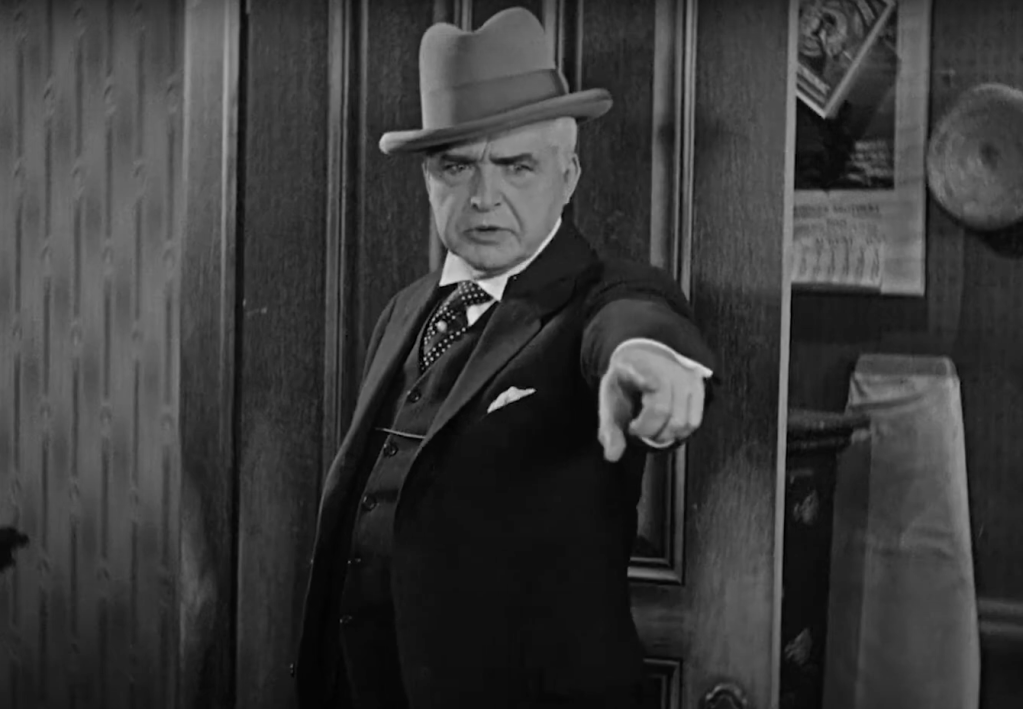
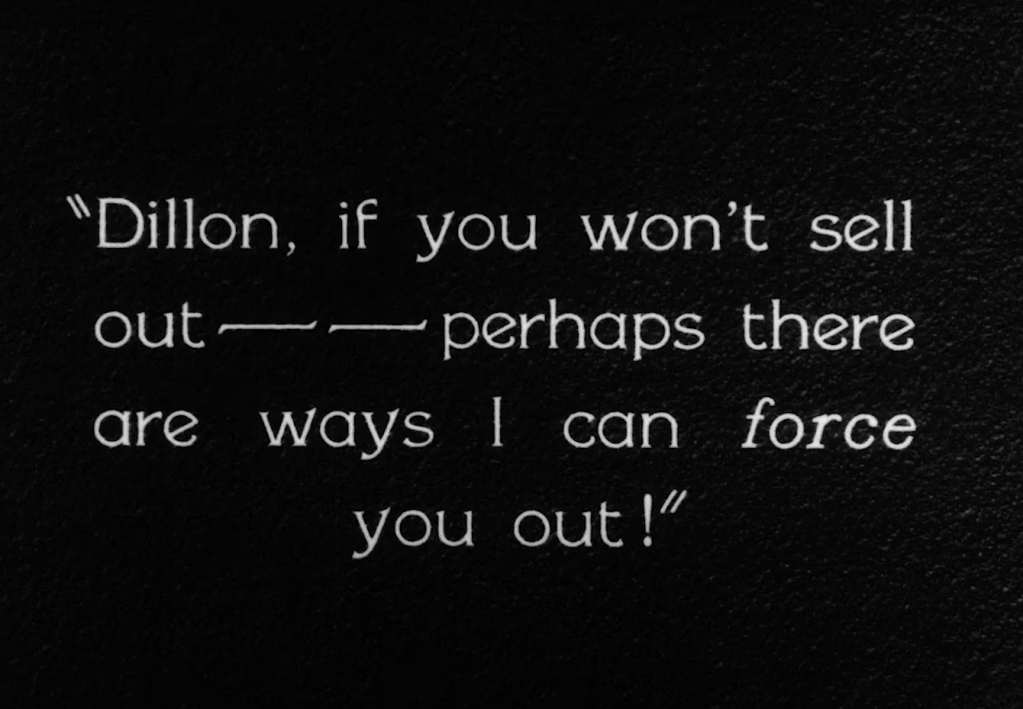
The railway companies representative threating pops in Speedy (1928).
As a direct result of this, Pop’s tram was stolen by the railway cartel during a brawl, that was instigated by the cartels’ hired goons. This hiring of goons to steal Pop’s tram, strongly mirrors that of American corporations utilising certain groups i.e. muscle for hire, to either infiltrate unions and or physically forcing their workers back to work. An example of muscle for hire would be groups such as the Pinkertons, which were notably used by many corporations throughout American history, because of their successful track record of union busting. Hence, this showcases the brass and the ability of large corporations to flout, and sometimes even break the law itself. This degree of comfortability in which large corporations felt about breaking the law in 1920s America, highlights the unchecked power and influence that they had over the United States government and its citizens during this period of American history.
Final thoughts:
In my investigation of how the Jazz Age was portrayed in the films and culture from this period, I hope that I have given you the reader, an insight into this era of change in American history.
Thanks for reading,
Seán.
Works Cited:
Lonesome. Directed by Paul Fejos, performances by Barbera Kent and Glenn Tyron, Universal Pictures, 1928. https://archive.org/details/lonesome-1928 [Accessed 5th November 2023]
“The Model T.” Ford Corporate, Ford Motor Company, https://corporate.ford.com/articles/history/the-model-t.html [Accessed 5th October]
The Crowd. Directed by King Vidor, performances by Eleanor Boardman and James Murray, Metro-Goldwyn-Mayer, 1928. https://archive.org/details/lafoulethecrowd1927kingvidorvosttcm [Accessed 2nd October 2023]
Speedy. Directed by Ted Wilde, performances by Harold Lloyd and Ann Christy, Paramount Pictures, 1928. https://archive.org/details/RelmpagoSpeedy1928 [Accessed 2nd October 2023]
Dumenil, Lynn. “The Modern Temper: American Culture and Society in the 1920s”. Hill & Wang, 1995.
Ebell, Monique, and Albrecht Ritschl. “Real Origins of the Great Depression: Monopoly Power, Unions and the American Business Cycle in the 1920s.” The London School of Economics and Political Science, June 2008, https://cep.lse.ac.uk/_new/publications/abstract.asp?index=3180 [Accessed 10th October 2023]
Klein, Christopher. “Why Labor Unions Declined in the 1920s.” Why Labor Unions Declined in the 1920s, A&E Television Networks, 18 February 2021, www.history.com/news/american-labor-unions-decline-1920s [Accessed 10th October 2023]
 Seán Leahy's Cinematic Portfolio